

News
IDRM researchers at Pint of Science Festival 2025
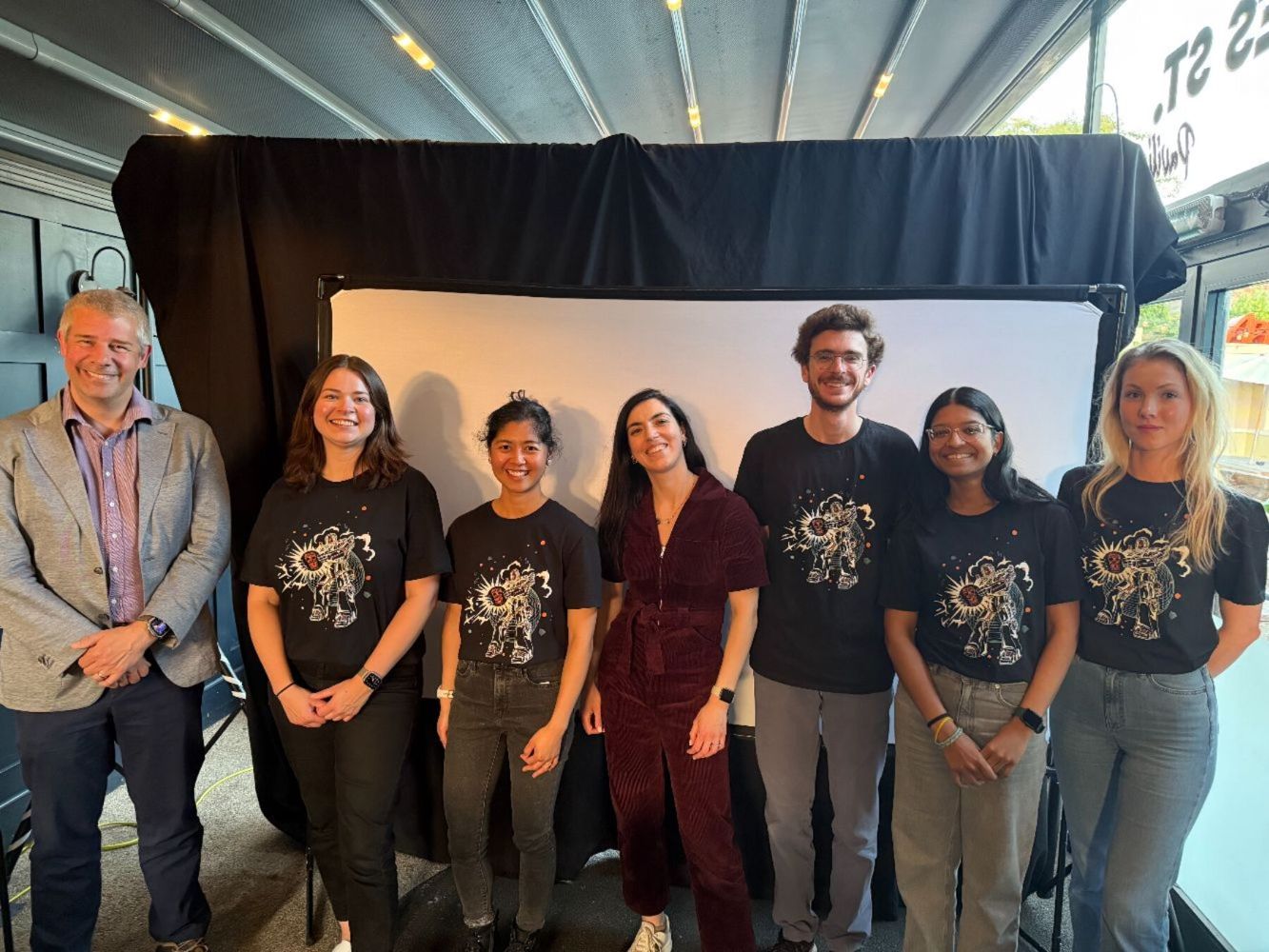
The Pint of Science Festival returned to Oxford’s pubs this May, offering a rare opportunity for the public to engage with cutting-edge research in an informal setting. Now in its 10th year, the international science communication festival invites researchers to bring their discoveries out of the lab and into everyday spaces, in a bid to encourage open dialogue and curiosity.
This year, the IDRM played a central role in both the organisation and delivery of the Oxford programme. IDRM research fellow Dr Claudio Cortes Rodriguez co-led the local Pint of Science team, with colleagues Dr Susanna Cooper and Dr Emma Haberman managing two of the festival’s signature themes, 'Beautiful Mind' and 'Tech Me Out'. Several other IDRM members were also instrumental behind the scenes, including Mary Strevens, Kostas Lekkos, Dave Grainger, and Catarina Ferreira.
Dr Claudio Cortes Rodriguez said: "Pint of Science is a very unique way of engaging with the public, bringing cutting-edge science and ideas to one of the most uniquely British institutions, the Pub. Being in Oxford provides the volunteers with access to an unprecedented number of world-leading researchers across all subjects, which we have taken advantage of over the years."
The Battle Against Our Own Genes
One of the Beautiful Mind evenings was proudly sponsored by the IDRM, allowing neuroscience researchers Professor Stephan Sanders and DPhil student Ambra Speciale to take the stage and share their work at 'The Battle Against Our Own Genes' event on 21 May. Held at James Street Tavern, the event was part of a sold-out Oxford programme – the first in the UK to reach capacity across all events this year.
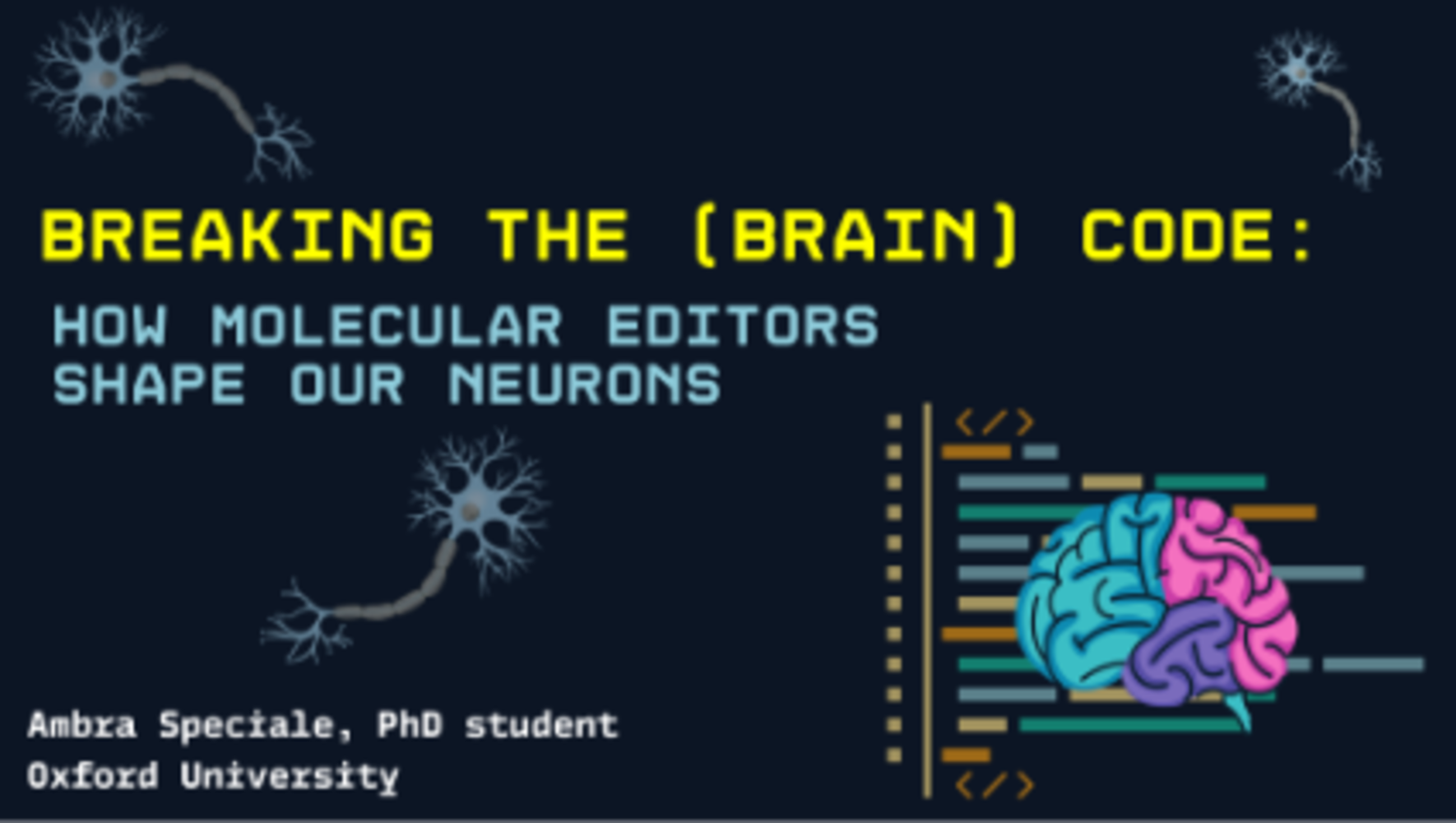
Ambra Speciale’s talk focused on RNA editing – a cellular process that can rewrite the body’s genetic instructions. Ambra presented her DPhil project, which focuses on understanding RNA editing dysregulation in neurological diseases and also talked about how RNA editing could be used as a tool to treat rare disorders.”
She said: "I think the audience was engaged throughout, and I could see the curiosity in their eyes when I showed them ADAR, the molecule I study, in action within a cell nucleus – something I personally find fascinating!"
Professor Stephan Sanders, Professor of Paediatric Neurogenetics and Director of the MRC CoRE in Therapeutic Genomics, spoke about the enormous potential and cost challenges of treating rare genetic diseases. “We have seen remarkable progress in treating, and even curing, severe genetic disorders such as sickle cell disease. But these therapies cost millions and with over 4,500 rare genetic disorders to treat, it's been estimated that this will take over 2,000 years and cost more than the USA’s whole economy."
Professor Sanders adds: "Fortunately, these therapies have a superpower – developing one makes the next one much easier to develop. To harness this superpower, a coordinated effort is underway across many scientists, clinicians, and agencies with the hope of transforming the lives of those affected by these disorders.”
George Murray, an audience member who attended the event, commented: “A great evening. Professor Sanders and Ambra gave such interesting and accessible talks. It filled me with great hope that this work being done in my hometown will make such a difference to so many families.”
On Research and Public Engagement
Several of the speakers and volunteers at this year's Pint of Science events in Oxford reflected the value of public engagement, not only for the audience, but for researchers themselves.
"Events like these make science and scientists more approachable. We're all passionate people, and I believe transmitting that feeling makes a difference. We're not just doing a job - we're actually putting so much more into it," said Ambra Speciale.
When asked what advice she would give researchers who are just getting started with public engagement, Ambra says: "If you can explain your research in simple terms that a pub audience understands, it means you truly understand what you're doing. It will force you to see the bigger picture. Also, the questions people ask might be quite challenging and inspiring!"
“Is it good networking? Yes. Does it look good on your CV? Yes. Is it fun? YES,” said Dr Claudio Cortes Rodriguez. “The buzz of new ideas, the bustle across the room as discussions are sparked, and the gratitude from people that attend the events are palpable. In our experience, Pint of Science strikes a chord with both the public and the scientists by cutting through the noise of highly curated media releases/headlines and bringing passionate, interested people together in a positive environment.”
Reflecting on the festival’s success, Dr Susanna Cooper said: “This year, the IDRM was an integral part of the event, both in terms of organising and delivering the science. Overall, all of our events were a great success and really highlighted the value of public scientific communication.”