

News
IDRM researchers find calcium signalling to be essential for body axis formation in early embryos
Researchers from the Institute of Developmental and Regenerative Medicine (IDRM) and the Department of Physiology, Anatomy and Genetics (DPAG) have uncovered a vital role for calcium signalling in establishing the body’s basic layout during early development.
Published in PLOS Biology, the study, led by Dr Matthew Stower, Postdoctoral Researcher in the Srinivas Group, reveals that calcium activity is required for the correct formation of the embryo’s anterior-posterior axis, the foundation upon which the entire body plan is built.
“Formation of the anterior-posterior axis during development is the process during which the basic body plan is laid down,” explains Dr Stower. “Due to its fundamental importance, errors in this process severely affect the development of the embryo.”
A closer look at calcium’s role
Calcium signalling is known to regulate a wide range of cellular processes, from fertilisation to cell-migration behaviour. Yet, its role during the earliest stages of mammalian development has remained poorly understood.
Dr Stower and colleagues suspected calcium signalling might play a guiding role in the coordinated cell movement that establishes the embryo’s body axes. In particular, they focused on a population of cells known as the distal visceral endoderm (DVE), which migrates to one side of the embryo, where it releases signals that pattern the axis.
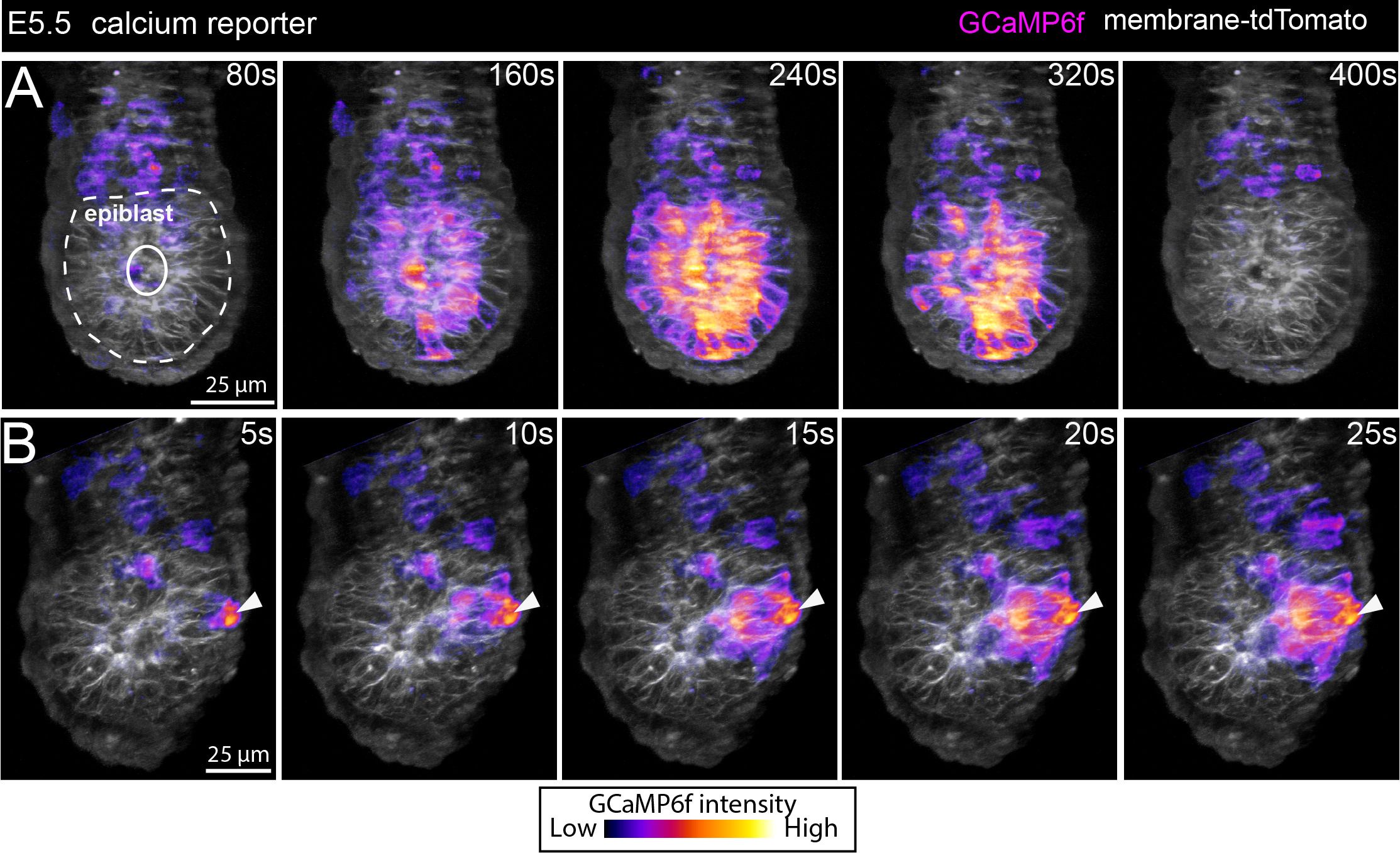
Using state-of-the-art light-sheet microscopy, the researchers were able to visualise calcium signalling at the single-cell level in mouse embryos, using a fluorescent calcium reporter. This allowed them to characterise, for the first time, the pattern of calcium activity in live mouse embryos undergoing development.
Results of the study
When the researchers inhibited calcium signalling, they observed that DVE cells failed to migrate, effectively halting axis formation.
Dr Stower said: "We found that blocking calcium signalling in the embryo prevented these cells from migrating, revealing a novel requirement for calcium signalling in the formation of the anterior-posterior axis."
New questions about early development
Dr Stower said: "Our findings have shown the critical importance of calcium signalling in the formation of the basic body plan during embryonic development. However, the mechanism through which calcium signalling functions to regulate this process is unknown.
Intriguingly, though the migration of the cells is arrested, they still retain the dynamic cellular projections that are normally associated with active migration. Future work to understand the processes downstream of calcium signalling in axis formation is ongoing."
The paper, “Calcium signalling is required for anterior patterning in the mouse embryo,” by Matthew Stower, Shankar Srinivas, and colleagues, is published in PLOS Biology.