

News
New study identifies essential role of oxidative metabolism in heart regeneration
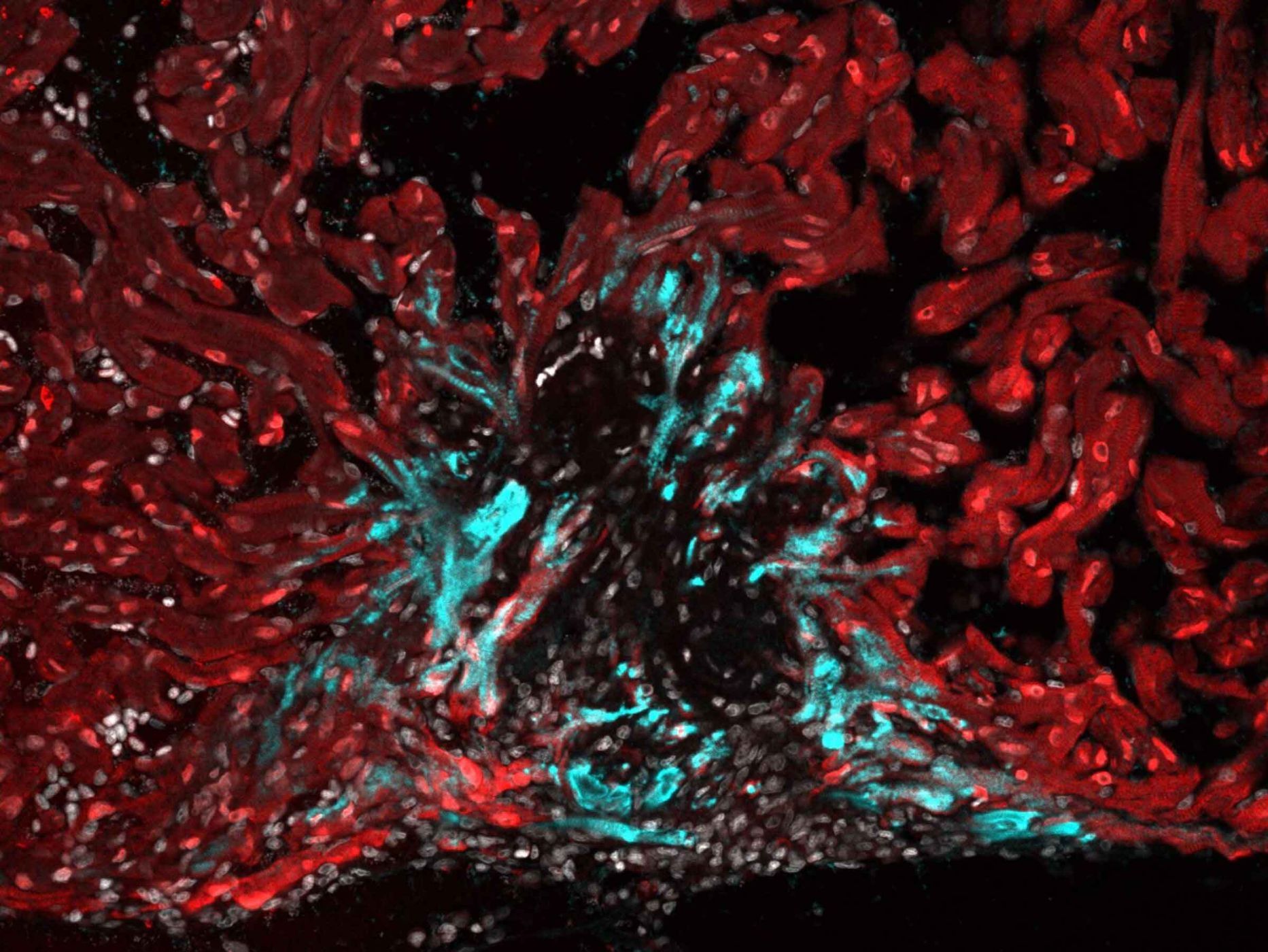
Researchers from the Institute of Developmental and Regenerative Medicine (IDRM) and the Department of Physiology, Anatomy and Genetics (DPAG) have shown that oxidative phosphorylation is required for successful regeneration after injury in zebrafish. The study, led by Konstantinos Lekkos (DPhil student) and Associate Professor Mathilda Mommersteeg, is published in Nature Cardiovascular Research.
Konstantinos Lekkos commented, "Do all zebrafish regenerate the same way? In our paper, we identify variations in the regenerative capacity of commonly used zebrafish strains. These differences led us to identify a surprising positive role of oxidative metabolism in promoting long-term heart regeneration. Challenging the idea that oxidative phosphorylation is detrimental to regeneration, our work suggests that it is an essential part of the re-differentiation of cardiomyocytes. Importantly, the absence of oxidative phosphorylation and re-differentiation leads to incomplete regeneration. "
Zebrafish are a widely used model for cardiac regeneration because they can replace lost heart tissue throughout adulthood. Previous work suggested that oxidative phosphorylation (OXPHOS) was detrimental to this process, as it produces reactive oxygen species that cause DNA damage and limit cardiomyocyte proliferation.
By comparing seven wild-type zebrafish strains, the researchers identified differences in regenerative capacity that correlated with activation of oxidative metabolism. Their analysis revealed that oxidative phosphorylation is switched off during the proliferative phase of regeneration, but re-activated afterwards to promote cardiomyocyte re-differentiation and maturation. Blocking this process led to incomplete regeneration.
The study also identified the malate–aspartate shuttle (MAS) as a key regulator of this metabolic shift. Genetic or pharmacological disruption of the MAS impaired regeneration, whereas cardiomyocyte-specific overexpression of the MAS gene mdh1ab improved regenerative outcomes.
Konstantinos Lekkos said: As oxidative metabolism is the predominant energy-producing pathway in the human heart, our work paves the way for the identification of targetable pathways to prevent heart failure.
This metabolic requirement appears to be conserved in other species, including a species of Mexican tetra (Astyanax mexicanus), where failure to upregulate oxidative phosphorylation was associated with scar formation in non-regenerative cavefish.
Future research will focus on defining the mechanisms controlling and linking OXPHOS and redifferentiation. The identification of those factors could potentially form the basis for the development of therapies.
The paper, Oxidative phosphorylation is required for fish heart regeneration, by Konstantinos Lekkos, Mathilda Mommersteeg and colleagues (IDRM and DPAG, University of Oxford), is published in Nature Cardiovascular Research.