

News
Sustainable Initiatives at the IDRM
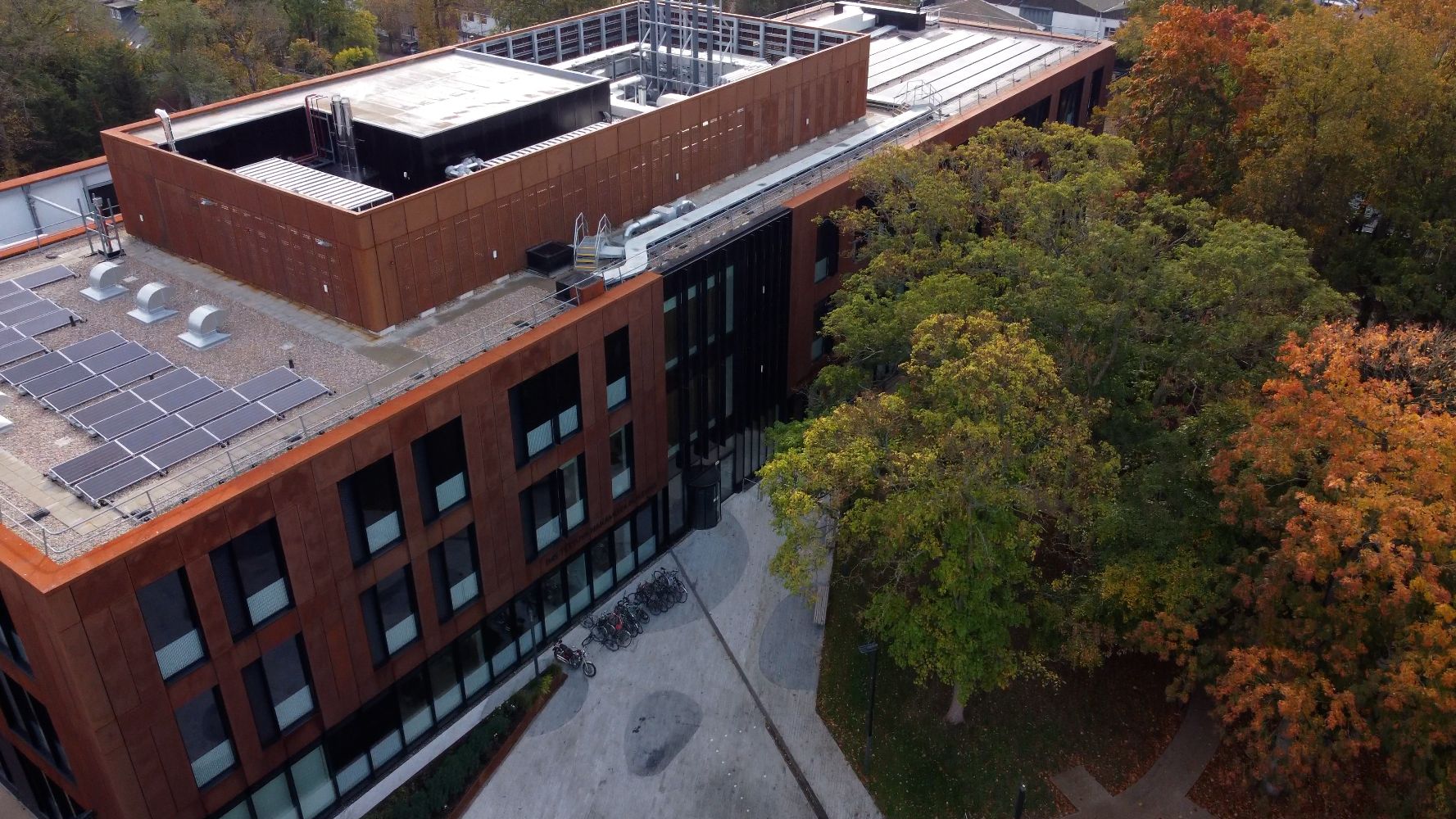
The Institute of Developmental & Regenerative Medicine is dedicated to improving sustainability as part of our commitment to a greener future. This story highlights the various initiatives implemented at the IDRM aimed at reducing our environmental impact.
Solar Panels
The IDRM has installed solar panels as part of its commitment to renewable energy. Since their activation on January 17th, the panels have generated 2783 kWh of energy, resulting in a CO2 saving of 1586 kg.
The power generated by the solar panels goes to energy usage for the building and its facilities to reduce reliance on non-renewable energy sources. Charlotte Houghton, Carbon Reduction Manager at the University of Oxford, said:
The IDRM has some of the most innovative technology installed during construction that has contributed to lower energy costs and carbon emissions. It is currently number 79 out of 203 buildings across the university estate when compared for total carbon/m2—this is very good for a laboratory building.
Recycling Coffee Grounds
The IDRM has begun recycling coffee grounds as part of our efforts to reduce waste. Spent coffee grounds are collected weekly by Pedal & Post bike couriers and taken to a central facility in Oxford. Then, they are processed into various bioproducts, including coffee logs, which are now being used in several colleges across the University of Oxford.
This initiative is estimated to save 6000 kg of coffee waste per year. Visit Eumelia to learn more about the recycling process.
Lab Recycling and Green schemes
Since the creation of IDRM's Sustainability Committee, various green schemes, such as LEAF and Green Impact, have been promoted within the institute. Efforts to reduce waste include:
-
Reusable Mob Caps: The specialist facility now uses reusable mob caps to replace single-use ones.
-
Expanded Polystyrene Recycling
-
Pipette Tip Recycling
The Good Gardener
The IDRM also participates in the Good Gardener Initiative, which aims to enhance biodiversity and support pollinators by encouraging staff to plant native wildflowers throughout the collegiate University. This initiative raises awareness of the importance of biodiversity in green spaces.
Bug House Competition
The IDRM has organised an inter-floor bug house competition to encourage teams to build bug houses, which will be placed in the wooded area outside the institute. This competition aims to promote biodiversity and engage staff in our sustainability efforts.
Beauty Banks
Andrew Brogden, IDRM's Deputy Building and Facilities Manager, has set up a beauty bank where staff can drop off unused and unopened beauty and hygiene products. IDRM volunteers then deliver these products to various community larders that support the SOFEA charity.
SOFEA is a charity that provides education, employability and wellbeing programmes for vulnerable young people.
The Institute of Developmental & Regenerative Medicine is taking meaningful steps toward a more sustainable future with various sustainable initiatives. Through these, IDRM is reducing its environmental footprint and fostering a culture of environmental responsibility as part of the wider sustainability strategy within the University of Oxford.