

News
IDRM researcher wins BHF fellowship award
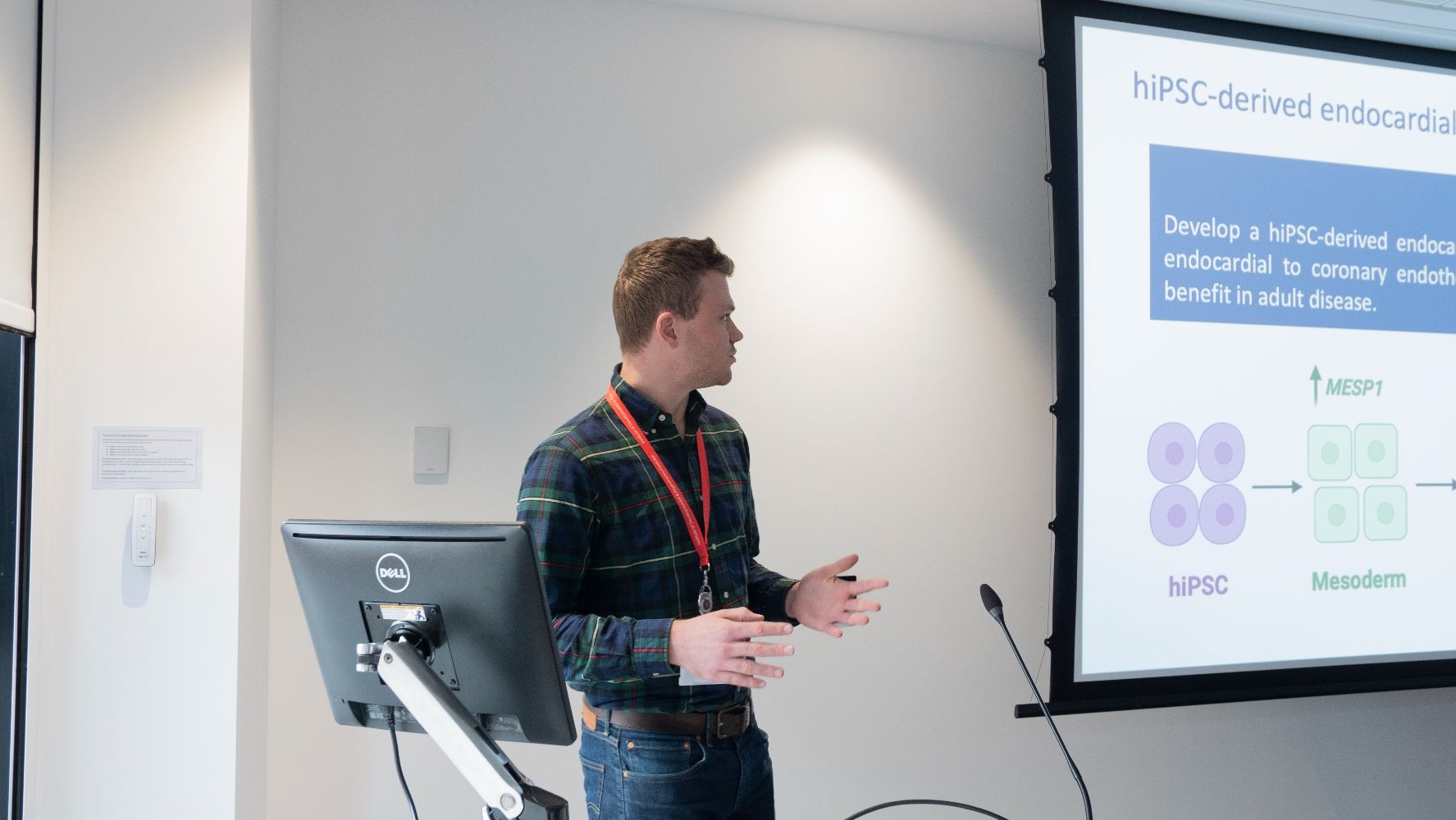
Dr Ian McCracken, Postdoctoral research scientist at IDRM's Smart Group, has been awarded the Immediate Postdoctoral Basic Science Research Fellowship by the British Heart Foundation (BHF).
Dr McCracken's fellowship project aims to shed light on the intricate processes that govern the transition of endocardial cells into coronary endothelial cells. These cells line the inside of coronary blood vessels, which supply the heart muscle with oxygen and nutrients throughout embryonic and adult life. Despite its significance, the underlying mechanisms driving this change remain largely unknown.
“My research focuses on understanding which genes control the formation of coronary blood vessels in the developing embryo. I hope this will lead to identifying new therapeutic targets to promote blood vessel growth in patients after a heart attack.”
The fellowship project entails using the latest single-cell omics technologies to map the conserved transcriptional and epigenomic landscape throughout the formation of the coronary endothelium.
In response to the award, Ian McCracken said:
“I am extremely grateful to the BHF for their support and excited for the upcoming four years of research.”
The Immediate Postdoctoral Basic Science Research Fellowship, awarded by the BHF, offers four years of support, allowing exceptional scientists like Dr McCracken to pursue groundbreaking projects in cardiovascular research. The fellowship encourages collaboration and knowledge exchange by encouraging up to 1.5 years of the award to be spent overseas or in a second UK institution.
Potential impact of the project
Improved understanding of the mechanisms underpinning the formation of the coronary vessels is likely to reveal novel targets for future therapeutic strategies to drive neovascularisation.
The proposed study will combine a novel human iPSC model alongside key single-cell omics data from murine models to collectively provide the most comprehensive characterisation of coronary endothelial cell development to date. This systematic approach will allow for the causative role of potentially conserved regulators of endocardial to coronary endothelial cell transition to be determined. This includes genes without an existing link to endothelial/endocardial biology.
After this will follow evaluating the capability of an identified regulator, found to be active in embryonic development, to promote endocardial angiogenesis and improved cardiac function in the ischaemic adult murine heart. Gene transfer of the identified regulator in this injury model will use a modified AAV-9 vector, paving the way for a future gene therapy treatment for ischaemic heart disease.