

News
Srinivas Group VR at Oxford Digital Festival
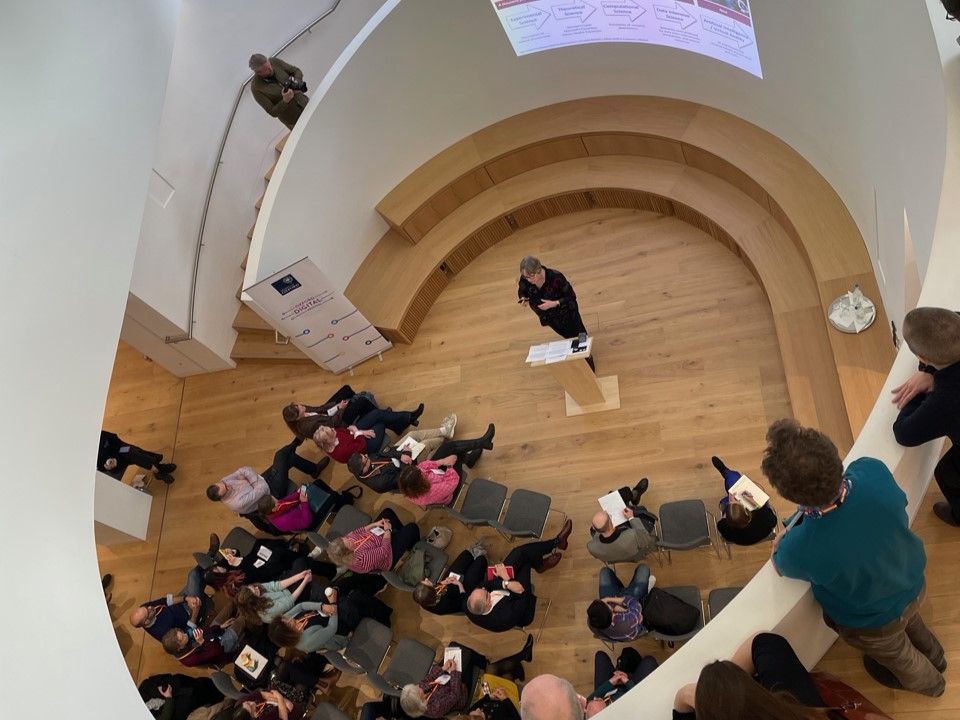
IDRM's Srinivas Group presented their VR activity "Shaping Destiny" at the Oxford Digital Festival on the 9th of November. Their technical collaborator, Kostas Pataridis, talked about the specifics of the VR technology, which enables people of different shapes and abilities to experience the virtual art space created by the Wellcome-Oxford IREF-funded public engagement with research project.
Prof. Shankar Srinivas, Dr Tomoko Watanabe, and Kostas Pataridis joined the Oxford Digital Festival to talk about their volume scanning approach using portable equipment developed for the community engagement project, Shaping Destiny. Their scanning technology does not require people to wear mocap suits, enabling them to scan people of different shapes and abilities. It works outside exclusive specialist studio spaces, opening up possibilities for more inclusive participation in digital art technology. People are able to experience the VR-based art created along with young people of Oxford with different abilities.
On the day, Shankar Srinivas and Tomoko Watanabe helped the visitors passing by their stall to experience the VR program. Kostas Pataridis (Andromeda Software Development) explained the portable technology he developed to do volumetric scans of people of different abilities to achieve inclusivity.
As standard motion capture has to be done in a specialised studio full of cameras and with a standard motion capture suit, it limits the number of people who can be represented in VR spaces. In order to bring real people into the virtual space, rather than giving them artificial avatars, Kostas chose to develop the technology so that the true shapes of people would be represented.
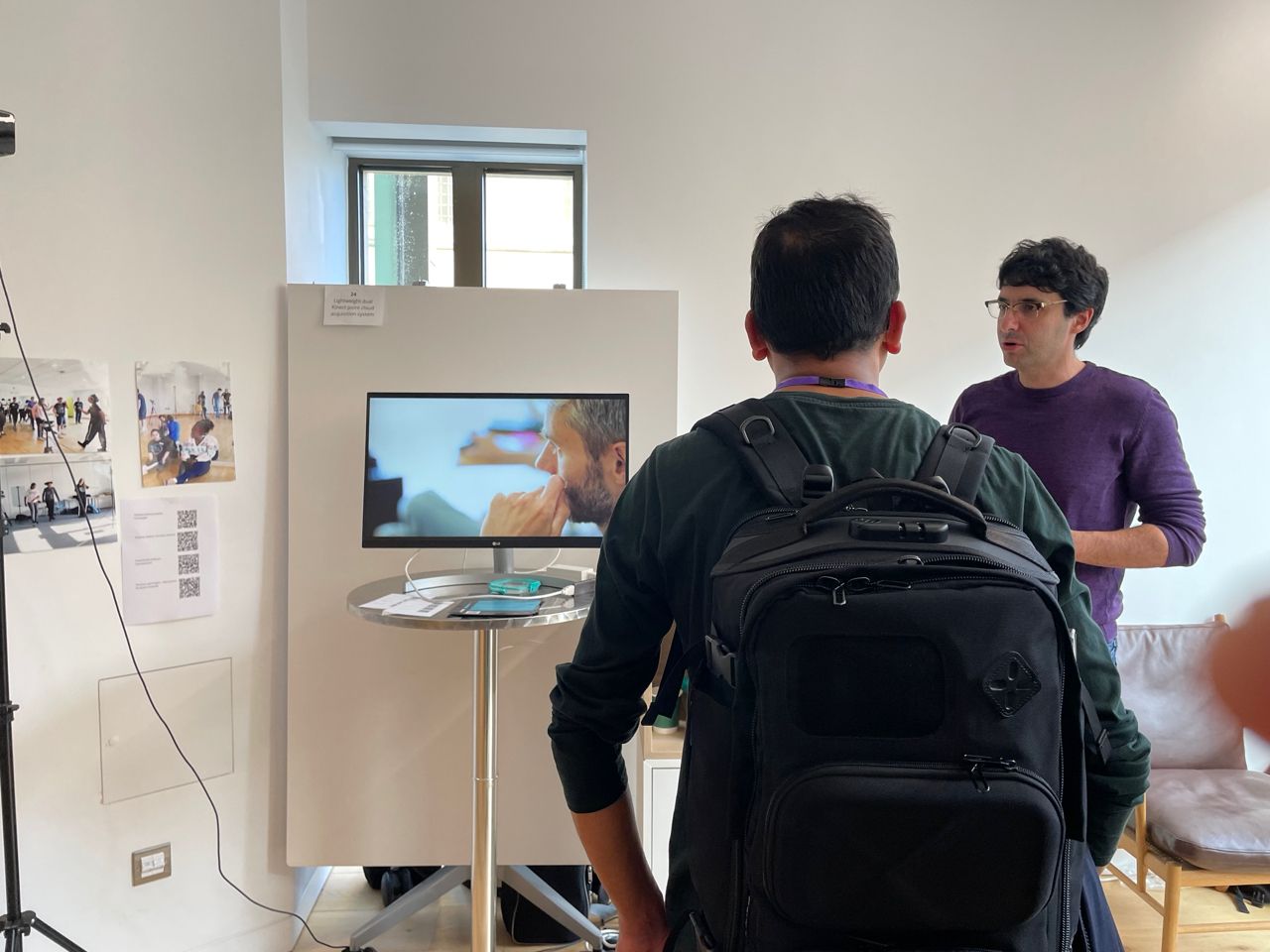
What is Shaping Destiny VR?
One of the aims of the Shaping Destiny VR program was to bring young people of Oxford, research in science and humanities, and art into one shared space which a viewer can interact with. Shankar Srinivas and Wes Williams went into community groups (Body Politic and the Parasol Project), engaged the young people with their research, and the groups created movements inspired by them. The VR developer, Kostas Pataridis, had to go to their community spaces, Barton Park and Rose Hill, to scan them so that they are represented in a virtual space.