

News
Insights into Therapeutic approaches for Duchenne muscular dystrophy
Dr Thomas Roberts, Research Fellow, discusses his paper Therapeutic approaches for Duchenne muscular dystrophy, which was recently published in Nature Reviews Drug Discovery.
What is DMD, and who does it affect?
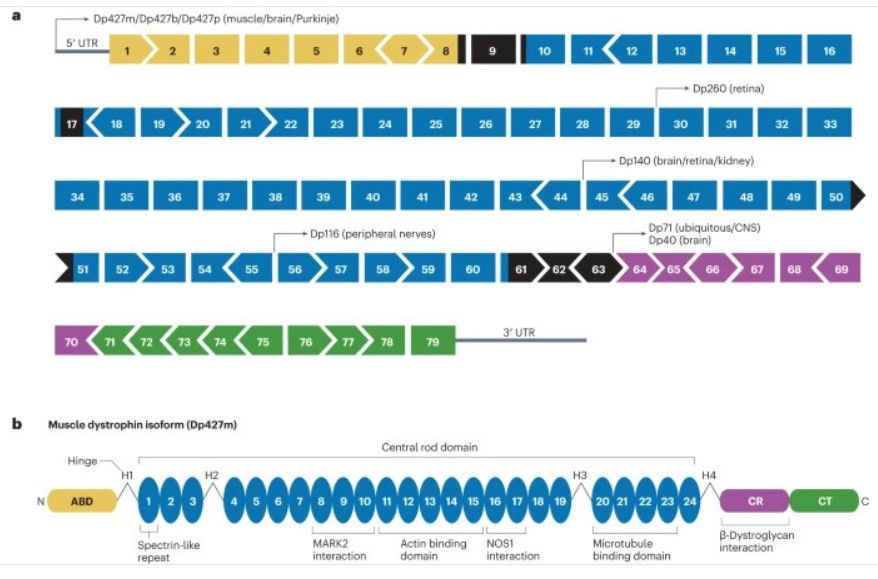
DMD is a muscle-wasting disorder that almost exclusively affects males. DMD first manifests in childhood and so has been considered a paediatric disorder. However, many DMD boys now progress to adulthood as a consequence of improvements in disease treatment and management. DMD is ultimately fatal, as the heart and the muscles that support breathing eventually fail. DMD is caused by a genetic defect in a single gene which encodes the dystrophin protein, which is required for normal muscle function.
Why is DMD a priority candidate for molecular and cellular therapeutics?
DMD is a relentless disorder that is devastating for the affected individuals and their families. While DMD is a rare disease, it is relatively common, affecting 1 in 5,000 live male births. Despite major recent developments in the search for treatments for DMD a truly game-changing therapy remains elusive. As such, DMD still represents a challenge for drug development and a major unmet clinical need.
What are the latest therapeutic strategies, and how far have they come?
There are currently six therapies that are approved in the US or Europe for the treatment of DMD:
- Four exon skipping drugs (eteplirsen, viltolarsen, golodiresen, and casimersen). These drugs require lifetime treatment and work to trick muscle cells in to generating a slightly shorter but functional dystrophin protein. This approach bypasses the effect of the disease-causing mutation.
- One-stop codon readthrough drug (ataluren). Some types of DMD-causing mutations introduce stop codons in the dystrophin gene. Ataluren tricks the cell into ignoring these stop codons so that full-length dystrophin can be produced.
- One gene therapy (elevidys). This gene therapy uses a virus to deliver a shortened replacement copy of the dystrophin gene to DMD patients' muscles. This is a one-time treatment that is expected to result in multiple years of dystrophin expression.
There are multiple other strategies being developed to treat DMD, but these are in earlier stages of development.
What are the limitations of the latest therapeutic strategies?
Despite progress in terms of regulatory approvals, the major problem with existing approaches is their low effectiveness. For exon-skipping drugs, the biggest single challenge is efficient delivery of the therapeutic molecules to patient muscle. In contrast, gene therapy currently requires high doses of virus, which may cause toxicity. Additionally, in some cases, the immune system may react to the newly introduced dystrophin protein. Notably, many types of therapies only apply to subsets of patients, so there is still a need for therapies that can treat all patients.
What is the potential impact of these strategies on the DMD field?
New developments are allowing for the treatment of greater numbers of patients. For example, exons skipping therapies are only applicable to patients with specific mutations. By contrast, a gene therapy strategy could theoretically be applied to all DMD patients. Although it is still in the early days with regard to gene therapy, the hope is that a single treatment could result in long-term sustained re-expression of dystrophin.
What is the potential impact of these strategies outside of the DMD field?
The therapeutic modalities used to treat DMD could be re-deployed to treat other diseases, especially other muscular dystrophies (e.g. myotonic dystrophy, facioscapulohumeral muscular dystrophy, limb-girdle muscular dystrophy). However, the fundamental delivery technologies could be used for treating a much wider range of diseases beyond muscle.
What lies ahead/What are the future prospects for DMD drug discovery?
Multiple pharma companies are working on exon-skipping drugs with enhanced delivery potential. It is likely that such strategies (e.g. conjugation to peptides or antibodies and chemistry optimisation) will result in drugs with improved effectiveness. Similarly, there are new virus variants that exhibit better muscle targeting, which may mean that lower doses can be used, thereby minimising safety concerns. The prospect of CRISPR-based gene editing strategies has opened up the possibility of permanent correction of the disease following a single treatment – although such approaches are at very early stages of development.