

News
Celebrating Career Milestones: From DPhil Candidate to Doctor of Philosophy
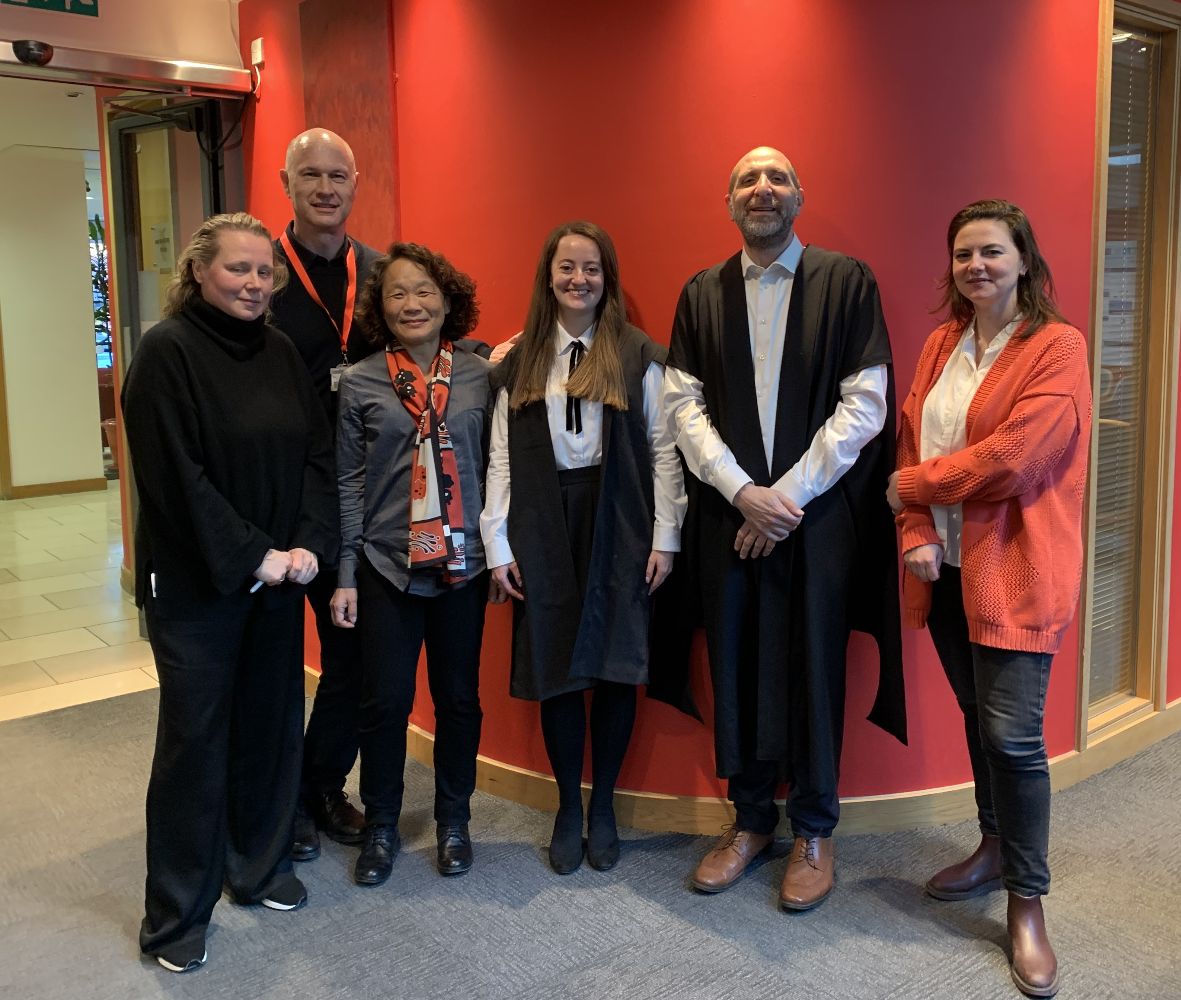
We would like to congratulate Dr Chloe Tubman for successfully defending her DPhil thesis on Friday 19th January, 2024 at the Weatherall Institute of Molecular Medicine (WIMM). Her project, ‘The role of Wilms’ Tumour 1b in the developing and regenerating zebrafish myocardium’, was funded by the Wellcome Trust as part of the Chromosome and Developmental Biology programme and the outcomes bring us a step closer to identifying potential therapeutic targets for human heart attack patients.
Unlike mammals, zebrafish are capable of regenerating their hearts following cardiac injury throughout adulthood. This is mainly driven by the ability of cardiomyocytes to dedifferentiate, whereby existing heart muscle cells lose their specialised characteristics and return to an earlier cell state in the same lineage, before rapidly increasing in number. However, the mechanisms underlying this ability are unknown and there may be additional, non-cardiomyocyte factors that aid in heart regeneration following injury.
Dr Tubman’s DPhil project investigated the molecular and cellular basis of zebrafish cardiomyocyte regeneration. She focused on the role of transcription factor Wilms’ Tumour 1b (Wt1b) and developed novel tools to determine how this protein contributes to heart repair. Cardiac cell types are highly conserved between fish and mammals and Wt1b has functional orthologues across species. This means insights into heart regeneration gained from her project are poised to identify areas of therapeutic potential for non-regenerating mammals, and importantly, humans.

of the ventricle (left hand chamber) and atrium (right hand chamber)
Dr Tubman defended her thesis to examiners Professor Richard White (Ludwig Cancer Research) and Professor Elly Tanaka (Research Institute of Molecular Pathology, Vienna), and her project supervisors, Professor Paul Riley (Director, IDRM), Professor Tatjana Sauka-Spengler (WIMM) and Dr Filipa Simões (Senior Fellow, IDRM), were there to lend their support and ultimately celebrate her fantastic achievement.
She is now busy preparing her project data for publication and planning her springtime relocation to the USA to join Professor Sauka-Spengler’s new lab at the Stowers Institute, Kansas City, Missouri, where she will complete some remaining experiments. This will be in collaboration with the IDRM, so while we wish her the very best with her continued research, we are pleased to say it is not goodbye just yet.