

News
IDRM researchers identify promising small molecule to improve heart repair after a heart attack
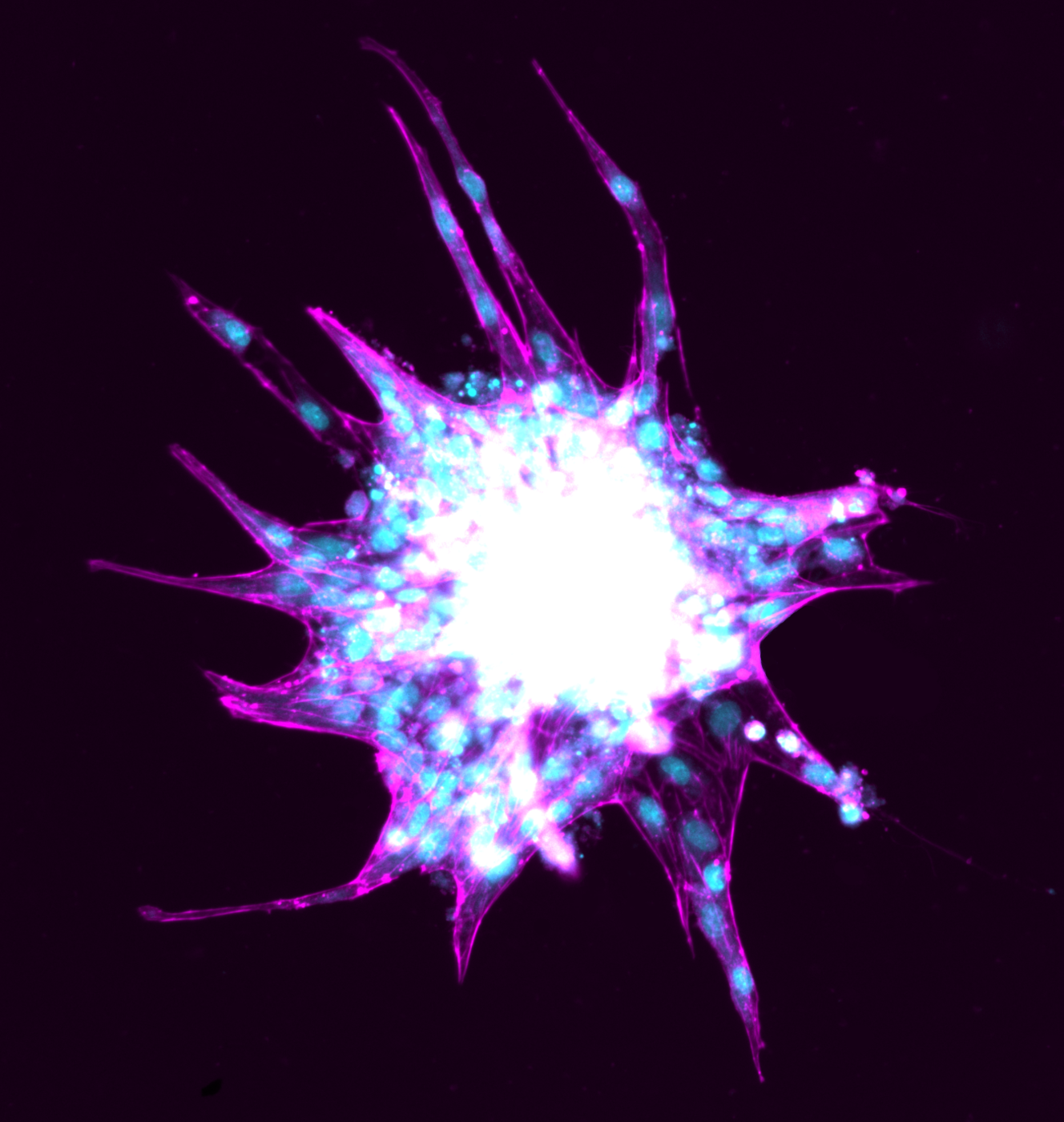
Researchers from the Institute of Developmental and Regenerative Medicine (IDRM) have identified a small molecule that promotes the growth of lymphatic vessels and improves heart function following a heart attack, opening up new possibilities for developing treatments to support cardiac repair.
Published in Proceedings of the National Academy of Sciences (PNAS), the study, led by Dr Christophe Ravaud in the Riley Group, identifies kenpaullone as a promising compound capable of stimulating lymphatic vessel growth in the injured heart.
The research, led by Professor Paul Riley, Director of the IDRM in collaboration with Professor Angela Russell at the Department of Chemistry at the University of Oxford, reveals a previously unrecognised mechanism through which kenpaullone promotes lymphatic vessel formation and demonstrates its potential to improve recovery following myocardial infarction (heart attack).
Following a heart attack, damaged heart tissue triggers inflammation and fluid accumulation, which can impair recovery. Previous research from the Riley Group has shown that stimulating the growth of lymphatic vessels, a process known as lymphangiogenesis, can improve heart repair by helping clear excess fluid and immune cells.
Until now, this approach has largely relied on the growth factor VEGF-C, which has limitations as a potential treatment due to its short lifespan in the body and difficulties with delivery.
To identify alternatives, the researchers developed a high-throughput screening platform using three-dimensional clusters of human lymphatic endothelial cells called spheroids. Screening 350 small molecules, they identified kenpaullone as a potent stimulator of lymphatic vessel sprouting.
Dr Christophe Ravaud said: "What I particularly enjoyed about this project was seeing how a relatively simple 3D spheroid assay could lead to exciting discoveries, from phenotypic screening to understanding the underlying biology. I hope this approach will help identify new ways to manipulate the lymphatic vasculature and promote cardiac repair after myocardial infarction.”
Further investigation revealed that kenpaullone acts by inhibiting a protein called MAP4K4, activating the ERK signalling pathway and increasing expression of VEGF-D, a growth factor involved in lymphatic vessel formation.
The researchers then tested kenpaullone in mice following myocardial infarction. They found that treatment increased lymphatic vessel growth in the injured heart and reduced the presence of certain inflammatory immune cells during early recovery.
Professor Paul Riley said: “I’m delighted to see this study published as a translational, drug discovery project based on phenotypic screening that Christophe Ravaud led-on and developed.
The lymphatic vessel sprouting assay is truly innovative and was key in identifying Kenpaullone as a potent small molecule inducer of lymphatic vessel growth that had significant beneficial effects in a mouse model of heart attack. We are now adapting the screen Christophe designed to discover target genes within REACT, the MRC/BHF Centre of Research Excellence in Advanced Cardiac Therapies.”
Importantly, kenpaullone-treated mice also showed improvements in cardiac function, including increased cardiac output and improved heart muscle contraction.
These findings identify a promising small-molecule alternative to growth factor-based approaches for stimulating lymphatic vessel growth and supporting heart repair.
Although further studies are needed to establish its suitability for clinical use, the discovery highlights MAP4K4 as a potential therapeutic target and provides a new platform for identifying compounds that could improve recovery following heart injury.
The paper, “Phenotypic screening identifies kenpaullone as a prolymphangiogenic compound to improve heart repair following myocardial infarction,” by Christophe Ravaud, Caroline A. Cuoco, Sarah Sigal, Paul R. Riley and colleagues, was published in Proceedings of the National Academy of Sciences (PNAS) on 6th October 2026.