

Tomoko Watanabe
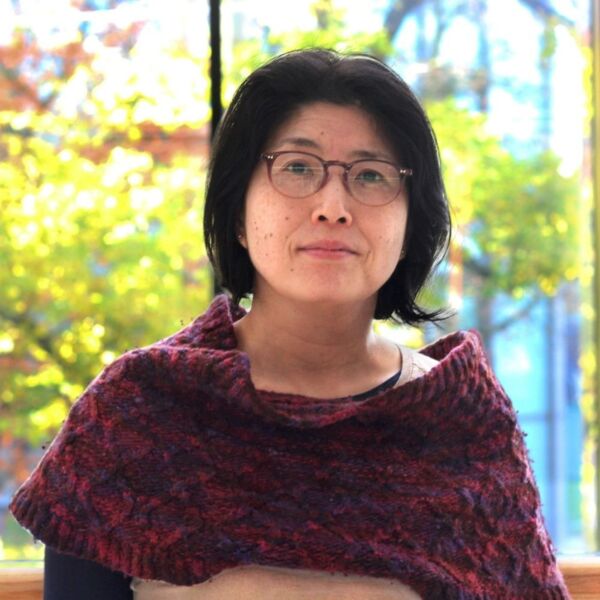
Meet Tomoko Watanabe, a postdoctoral research scientist at the Srinivas Research Group and a product lead in the Shaping Destiny public engagement project. Tomoko joined the Srinivas group in 2006 to study cell lineage in preimplantation embryos. She currently leads the public engagement effort for two Srinivas group projects.
Can you give a brief overview of your career trajectory so far?
I was trained as a microinjectionist before entering graduate school. I then did a PhD at Columbia University on kidney morphogenesis. I then went to UCL, where I worked on pre-implantation embryos. In 2006, I joined the Srinivas lab, where I still work today.
What is your research focus?
The Srinivas group focuses on studying how embryos develop. A human embryo starts with a single cell which multiplies and differentiates to form our tissues and organs. Another part of the study is how the heart forms during the period of early embryonic development. The question is how the mechanical forces in the body and in the environment influence heart development over time and how they interact with the genetic component.
What has been your highlight this past year at the IDRM?
Our move to the IDRM allowed us to join a building with a more interactive scientific environment and collaborative community. We had to coordinate the move of very specialised imaging equipment. Here, we can connect with neighbouring research groups more easily and find areas of overlap and collaboration.
What do you look forward to most this year?
This year, the Srinivas group is concluding the Shaping Destiny public engagement project and starting the HDBI public engagement project with support from the Wellcome Trust. For Shaping Destiny, we will hold an event on June 10th led by TORCH, the humanities branch of Oxford University. For the HDBI, we are teaming up with the MPLS Oxford Sparks podcast, which will be released during Hilary term. We also hope to continue other aspects of this project until 2025. Tickets for the performance on June 10th can be booked here.
What do you do outside of the lab?
When I have time, I knit and carve wooden spoons. I used to climb and was a lead climber. Now, I enjoy cooking, preparing Chinese and Japanese tea, and spice making, but mostly, I spend time with my family.