

Konstantinos Lekkos
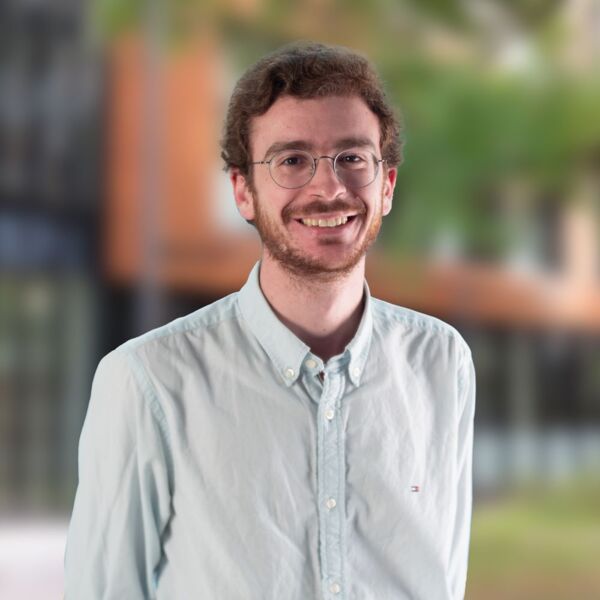
Meet Konstantinos Lekkos, a DPhil Student in the Mommersteeg Group. Kostas completed his integrated MSci degree in Molecular Biology at the University of Aberdeen, with a placement year spent working in the Mommersteeg Group. He continued with the group as a Research Assistant, before beginning his DPhil project exploring the role of oxidative metabolism in zebrafish heart regeneration.
Tell us a little about your current research
I am a DPhil student in the Mommersteeg Group where we are very interested in how to achieve heart regeneration. In contrast to humans, zebrafish maintain the impressive capacity to regenerate lost cardiac tissue throughout their adult life. This makes them a great model to study the regenerative process. In my project I compare the regenerative ability of various wild-type zebrafish strains to identify novel pathways involved in cardiac wound healing. My experiments show that oxidative metabolism plays an important role in heart regeneration, contrary to what was previously believed. Importantly, manipulating a gene involved in this type of metabolism makes fish hearts regenerate better!
What inspired you to pursue this field of research?
My interest in cardiovascular sciences was sparked by a series of summer internships I did at Prof Mavroidis lab at the Biomedical Research Foundation of the Academy of Athens, which involved looking into the role of the complement-coagulation systems in arrhythmias.
Later on I learned about the work done by Prof Mommersteeg and the possibility to regenerate hearts after heart attacks fascinated me. I did my placement year at her lab and even extended my stay beyond that, and now am doing my DPhil here! I think it is incredible how zebrafish can induce their cardiomyocytes to proliferate, alter their differentiation state, migrate and restore lost cardiac tissue. I find motivation in the immense therapeutic potential of finding out the mechanisms behind this regenerative response.
What is one of the key moments or discoveries during your research career that made you stop and think ‘this is why I do what I do’?
Many things, from the everyday experiment that works well all the way to the surprising finding that makes all the pieces of the puzzle to fit perfectly together. I particularly enjoy microscopy and can spend a lot of time looking and admiring the cardiomyocytes structure in the heart. Being able to observe under the microscope the processes we study is one of the many reasons I like biology!
I also particularly enjoy discussing about my data. The never-ending nature of science and the fact that there is always something new and interesting to be discovered is fascinating.
How has being a part of the IDRM community helped shape your research and/or career development?
The IDRM is an amazing place to work in! Having all the cardiovascular development and regeneration labs under one roof gives us the opportunity to learn from each other, collaborate, discuss and exchange ideas. This is one of the great strengths of the Institute. Everyone is very friendly and there is a great team spirit! Additionally, the IDRM seminars have been a particularly enhancing experience for me as we get the chance to hear and learn from leading scientists from around the world.
How do you like to relax and recharge outside of the lab?
I am a regular participant of the IDRM Board Games Night (thanks Sarah and Cristophe for organising!). I also participate in the activities organised by the St John’s College MCR such as the book club (I would recommend “We do not part” by Han Kang who won the 2024 Nobel Prize in literature) and of course the formal dinners… Additionally, I am a member of the Oxford Union where I enjoy the debates.
What would be the theme song to your life right now?
As a cardiac scientist I feel that I should compose a list containing songs like “Heart Atack” by Demi Lovato, “Heart of Glass” by Blondie or even “Don’t Go Breaking My Heart” by Elton John and Kiki Dee. Nevertheless, something like “The Sultans of Swing” by Dire Straits is more to my liking.

