

Katarzyna Chwalenia
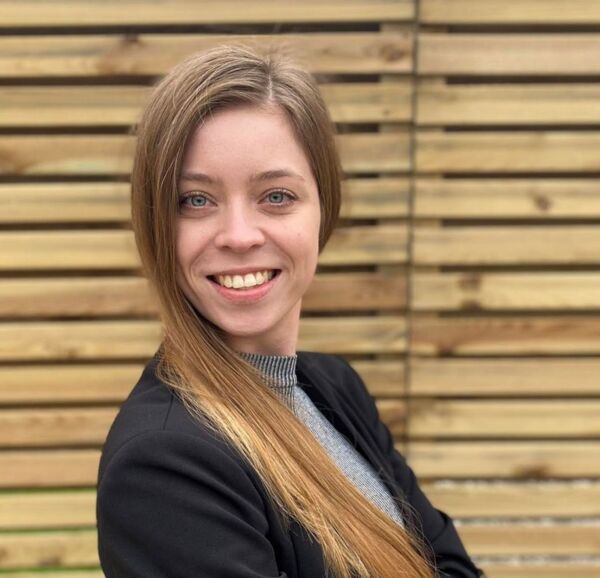
Meet Katarzyna Chwalenia, a DPhil student comparing different therapeutic strategies for Duchenne muscular dystrophy in Prof. Matthew Wood's lab. Her interest in the field of neuromuscular disorders began during her MSc in Biochemistry, where she studied the molecular aspects of Duchenne muscular dystrophy progression. Kasia joined the Wood Lab in 2018 as a research assistant and was awarded the Juel-Jensen Clarendon Scholarship to pursue a DPhil degree in Paediatrics.
Can you give a brief overview of your career trajectory so far?
I am originally from Poland, where I obtained my BSc and MSc in Biochemistry at Jagiellonian University in Kraków. During the studies, I took part in the Fulbright Poland Biolab programme and moved to Charlottesville (USA) for a year to work on chimeric RNAs in cancer at the University of Virginia. After graduation, I moved to the UK, starting a job as a research assistant in Prof. Matthew Wood lab, where I am now continuing research as a DPhil student. I have worked in 5 different labs so far, really enjoying the science in every one of them.
What is your research focus?
I am comparing different therapeutic strategies for Duchenne muscular dystrophy on a single-cell level. Muscle cells (myofibers) are exceptionally long (up to 42cm in adult humans) and contain hundreds of nuclei. They are complex in their structure and organisation. Not much is known about the transport of different molecules within myofibers, but our data suggests that dystrophin (protein missing in Duchenne patients) is restricted in its localisation and does not travel far. This poses a significant issue when considering different strategies currently used to treat the disease.
What has been your highlight this past year?
Visit to Prof. Eric Wang lab at The Center for NeuroGenetics, University of Florida. I have spent two months there, learning single myofiber isolation, RNA FISH, and advanced image analysis techniques. I am now implementing those into my DPhil project, specifically looking at dystrophin protein and mRNA transport in myofibers isolated from mouse EDL muscle. It was a great training and networking experience. I have been lucky to discuss many ideas with exceptional researchers, which gave me and my DPhil a significant boost. Florida itself was an incredible wildlife experience (porcupines and alligators all over) and, of course – tons of sunshine.
What do you do outside of the lab?
Outside of the lab, I am trying to make the best out of my time as an Oxford student. I am a certified yoga teacher and have been leading departmental online classes during the pandemic. I am involved with Department of Paediatrics Graduate Student Committee, and the Clarendon Students council - trying to make a small but meaningful contribution.