

François Halloy
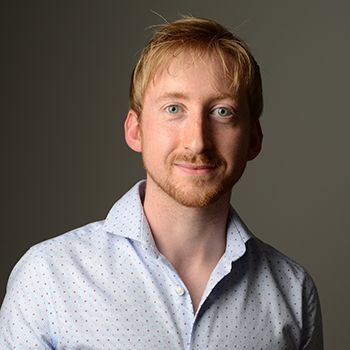
Meet François Halloy, SNSF Postdoctoral Research Fellow in the Wood Group, whose research focuses on the development of oligonucleotide therapeutics for the treatment of neuromuscular disorders. Although oligonucleotide drugs are powerful tools for treating genetic disorders, they suffer from several limitations related to their chemical structure and limited accumulation into important organs. Among those are brain, spinal cord, heart and skeletal muscle – all important tissues to target in the context of neuromuscular disease.
What has been your favourite research finding this year?
I am working on the delivery of oligonucleotide therapeutics beyond the blood-brain barrier. One of our strategies is to use antibody shuttles that are taken up at the blood-brain barrier and then release oligonucleotides in the central nervous system. I synthesised my very first monoclonal antibody-oligonucleotide conjugate at the beginning of the year. Being an oligonucleotide chemist, there was something strangely joyful looking at the mass spectrometry data and seeing this clean product peak at 170 kilodaltons. We rarely produce oligonucleotide conjugates with such high molecular weights.
What has been your highlight this past year?
I was nominated by the Swiss Academy of Sciences to attend the 71st Nobel Laureate meeting, dedicated to Chemistry. It was a memorable experience: 600 young scientists from all over the world, five days of talks and open discussions led by 30 Nobel Laureates, all of this in a venue with a magnificent scenic view on Konstanz Lake and the Alps. Also, I was one of the 14 young scientists selected for a short talk presentation in the “Next Gen Science Session”, enabling me to present my doctoral research in front of this prestigious audience. Definitely a conference I will remember!
What steps have you taken recently in your career?
I recently secured the Drapers’ Company Non-Stipendiary Junior Research Fellowship in Biochemistry at St Anne’s College commencing September 2022. I am very proud of this, especially as I am an overseas researcher. I look forward to the start of the position, to networking with other academics, and to pursuing my integration within the academic community in Oxford. I also hope to contribute to teaching activities and to the social life of the College.
What do you do outside of the lab?
Outside the lab, I aim to make the most of my UK life experience! I like going out for city trips, hikes, and tasting some samples of the British cuisine in country pubs. I also really enjoy languages and would like to resume courses to progress with German and Italian.