

Fatima Dhalla
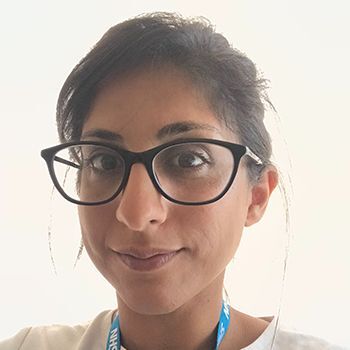
Meet Fatima Dhalla, Postdoctoral Research Scientist in the Hollander Group and Academic Lecturer in Clinical Immunology at the John Radcliffe Hospital. Fatima primarily studies the development and function of the thymus, the primary lymphoid organ responsible for the development of T cells that fight infections and cancer.
What projects are you working on?
I study the developmental pathways underlying regular thymic organogenesis from the very earliest stages and how this is disrupted in DiGeorge Syndrome, a congenital condition that causes underdevelopment or absence of the thymus, resulting in very low T cell counts and susceptibility to infections. I’m setting up an in vitro system to direct the differentiation of induced pluripotent stem cells (IPSCs) along the same developmental pathway as thymic stromal cells and plan to use this system to probe the consequences of novel candidate genetic variants for human thymic developmental disorders. Finally, I also work on a project looking at the molecular mechanisms by which FOXN1, the master regulator of thymic epithelial cells, functions.
What is your favourite research outcome this year?
Actually, one of the projects I have spent a lot of time on this year doesn’t relate to thymic stromal cell development, rather to a new genetic cause of immune deficiency that affects T-cell development and function in a T-cell intrinsic manner. One of the great things about science is the freedom to go off on a slight tangent if you have a particularly interesting finding or opportunity. Focussing more on T-cells rather than thymic stromal cells has meant I’ve had to learn some new biology and techniques. It has been a highly collaborative project and because it slightly deviates from my supervisor’s focus, I have been able to take a more senior role.
What do you hope to achieve when you move into IDRM?
It’ll be a great opportunity to meet new people, collaborate with new groups, and progress our science in exciting new ways. I also look forward to learning new techniques and using some of the new equipment, such as the flow cytometers. I also hope to apply for a fellowship to continue my research career and work towards increasing independence.
What do you do if you are not in the lab?
I spend 50% of my time doing research and 50% of my time training to be a clinical immunologist. If I’m not in the lab, you’ll find me working at the John Radcliffe and Churchill hospitals, looking after patients with inherited and acquired disorders that affect immune system development, function and regulation, and present clinically with immune deficiency, autoimmunity and allergy. This is a big year for me because I’ve nearly completed my training and have my final exams to complete. I also teach varied aspects of fundamental and clinical immunology to Oxford’s MSc and medical students, and doctors in training. When I'm not working, I spend most of my time with family and friends. At the weekends I enjoy taking my 3-year-old son swimming and going on long walks with our dog.