

Emilie Wigdor
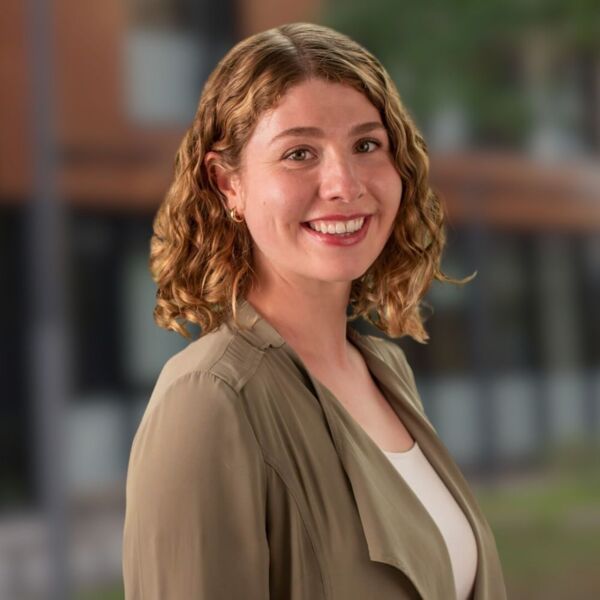
Meet Emilie Wigdor, a Postdoctoral Research Scientist in the Sanders Group. Emilie trained as an associate computational biologist before moving to the Wellcome Sanger Institute and the University of Cambridge to complete a PhD in genomics. Emilie's current research in the Sanders Group explores how genes shape brain development and influence neurodevelopmental and psychiatric disorders.
Tell us a little about your current research
Many genetic variants and genes have been implicated in autism, but a central challenge is understanding how those variants exert biological effects. In other words: what are they doing?
Although most cells in our body share the same DNA, they can perform very different functions. A neuron and a skin cell, for example, have identical genomes but regulate and express genes in highly specific ways.
My main project analyses post-mortem human brain tissue to understand how genetic variation modulates gene regulation in specific brain cell types in autism.
As technologies like spatial transcriptomics and machine learning accelerate this work, it feels like a pivotal moment to integrate genetics with functional genomics. I’m keen to help shape how these approaches are integrated thoughtfully and at scale.
What inspired you to pursue this field of research?
It started with a broad curiosity about the brain and how it gives rise to cognition, behaviour, and identity. As an undergrad, I studied cognitive neuroscience and led the Harvard Society for Mind, Brain and Behavior (HSMBB).
Through HSMBB and a bioethics seminar, I met Steve Hyman, who was instrumental in helping me think through my next steps. I told him I wanted a stronger foundation in neuroscience, genetics, and quantitative methods. So, he introduced me to Elise Robinson and Karestan Koenen at the Broad Institute.
There, I was immersed in statistical genetics focused on autism and neurodevelopmental conditions. That experience was both challenging and formative, reshaping how I thought about complex traits and human disease. It was then that I first encountered Stephan’s work, particularly his research on de novo copy number variants in autism.
I continued down that line of research through a PhD at the Sanger Institute and the University of Cambridge with Hilary Martin, working on rare and undiagnosed neurodevelopmental disorders. Ultimately, it led to my current postdoc in Stephan’s group (a true full-circle moment).
Looking back, it’s been a journey shaped by curiosity, mentorship, openness, and a determination to build the skills needed to pursue complex questions.
Tell us about a key moment or discovery during your research career that made you stop and think ‘this is why I do what I do’?
Recently, multiple lines of evidence in my project began to converge on the same gene as being particularly relevant to autism. After spending longer than I care to admit carefully quality-controlling and analysing messy post-mortem data, it was striking to see signals from chromatin and RNA pointing in the same direction.
Data quality control is often…underappreciated, and it can be difficult to know when you’re seeing real signal rather than artefact. When I turned to the literature and saw that the same gene had also been implicated through genetic studies and interrogated experimentally by researchers whose work I respect, it felt deeply validating.
The big, flashy “eureka!” or news-worthy moments are rare. This reminded me why I enjoy this work so much: it’s incredibly motivating to build a coherent picture from different sources of evidence and use that to better understand how things actually work. It cemented the kind of scientist I aim to be: someone committed to careful, integrative analysis that produces mechanistic insight others can build on.
What has been the most significant challenge you've faced? How did you overcome it and what lessons did you take away from that experience?
The most significant challenge I’ve been navigating over the years is a series of serious family health challenges alongside major professional transitions.
It’s reshaped my perspective on what meaningful work looks like and deepened my understanding of the realities faced by patients, caregivers, and families. In the context of rare disorders, it’s given me insight into the diagnostic journey, the uncertainty families live with, and the advocacy required within care systems.
It’s also given me a quieter kind of confidence: having moved through difficult periods, I’m more grounded and discerning about where I invest my energy.
How has being a part of the IDRM community helped shape your research and career development?
It’s pushed me to think about my research more translationally and more broadly. As researchers, once we become comfortable within a particular area of expertise, there can be a tendency to remain in familiar intellectual spaces. And there’s real value in that depth.
At the same time, being part of the IDRM has encouraged me to think beyond discovery alone and to consider what it takes for mechanistic insight to become actionable. Working alongside people in drug delivery and therapeutics, particularly through the MRC CoRE in Therapeutic Genomics, has made me more attentive to experimental tractability, model systems, and scalability — not just statistical significance (but I still really care about statistical significance). It’s also prompted me to think more structurally about how research ecosystems are designed to move knowledge forward.
More personally, it’s reinforced my belief that impactful science doesn’t require any one person to know everything. It depends on developing deep expertise and working in deliberate partnership with others who bring complementary strengths. Rigorous science and meaningful impact require both depth and coordination.
How do you like to relax and recharge outside of the lab?
I like to see friends, go to the pub, enjoy good food, binge-watch a TV show, walk along the river, read, or grab a hot drink at a café. I’ve never met a dance floor I didn’t like. I’m also a New York Times Games “Connections” and “Pips” enthusiast.
What’s the song you’d pick for karaoke if you had to sing right now?
Anything Beyoncé - probably “HEATED” right now.