

Claudio Cortes Rodriguez
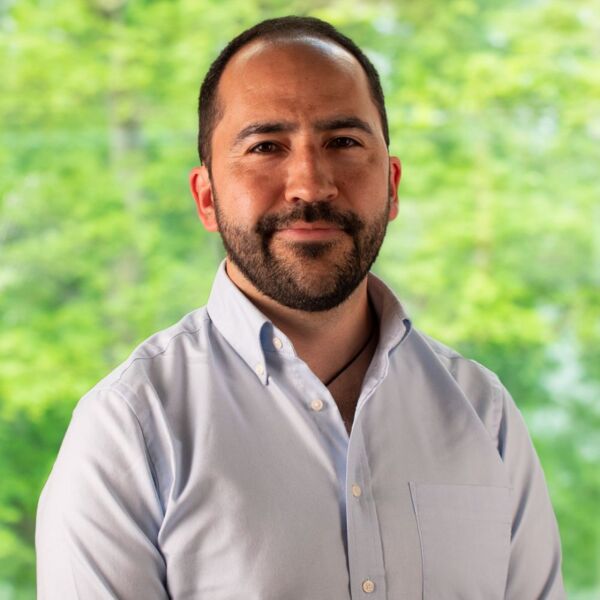
Meet Claudio Cortes Rodriguez, a Postdoctoral Research Fellow in the Riley group. After earning his BSc from the University of Chile, Claudio completed a PhD in Molecular Genetics in Australia, where he investigated rare genetic diseases. Relocating to France, he specialised in developing innovative live imaging techniques to study heart development. Now in the Riley lab, his research focuses on uncovering the cause of defects in the heart wall.
Tell us a little about your current research
I am currently studying the most common type of congenital disease, ventricular septal defects (VSDs). As the name implies, these happen when the wall/septum that separates the ventricles of the heart does not close in-utero, with around 1 in every 200 livebirths affected. They are normally detected as a heart murmur, due to the noise created by blood flowing through the gap between ventricles. In patients with VSDs, there is mixing of oxygenated and non-oxygenated blood and the heart needs to work harder to keep blood flowing properly. This will cause cardiac issues that require surgical intervention, yet we do not understand how most of these defects arise. I am using a mix of microscopy, genetics, advanced image analysis and spatial transcriptomics to study how this septum forms and grows, and the different ways in which it can go wrong (like in Trisomy21/Down Syndrome). We use human samples and animal models, with the ultimate goal of helping manage these extremely common yet not well understood defects.
What inspired you to pursue this field of research?
Spending time outside and seeing the almost endless forms of living things around us has always fascinated me, and as part of my background in developmental and cell biology, I am very driven to understand how these shapes arise. Congenital heart defects are a good example of how understanding how the heart acquires its shape directly helps us tackle unmet needs in human disease, and there is a shocking amount that we do not know about how the heart forms.
What is one of the key moments or discoveries during your research career that made you stop and think ‘this is why I do what I do’?
I have been very lucky to have the opportunity to work with very rare samples, make new discoveries and then engage with people and families directly affected by these heart conditions. As much scientific knowledge as we can derive from our studies, seeing the direct and immediate impact of my research on people’s lives remains a major highlight of my career.
What has been the most significant challenge you've faced? How did you overcome it and what valuable lessons did you take away from that experience, both personally and professionally?
I learned that in academia (as in life), resilience is one of the single most important skills to develop. Because much of what we do is hypothesis-driven, things can and will fail, and a key part of doing and enjoying research is to understand that these setbacks are temporary, roll up your sleeves and follow the data.
How has being a part of the IDRM community helped shape your research and/or career development?
The IDRM community is very open and collaborative which, coupled with the breadth of experience and expertise present in the building, has allowed me to explore a whole new set of ideas that would not have been possible elsewhere. The open plan makes spontaneous interactions much easier, and many coffee machine chats have turned into opportunities, collaborations or ideas! The IDRM also spends a lot of time, effort, and money in providing spaces where people can come together around science, technologies, public engagement, EDI, which helps keep me up-to-date with new developments in the field and all-in-all makes me a more well-rounded scientist....
How do you like to relax and recharge outside of the lab?
I have many interests that I love relaxing into - climbing, drumming, cooking, music gigs, photography, dancing. I try to maintain a mix of social and self-time, which helps me recharge and stay healthy. And always up for a cheeky glass of wine!
What would be the theme song to your life right now?
Hard to put a single song/mood down, a normal day will range from Royal Blood to Tokyo Tea Room to Taylor Swift. I have been listening to a lot of NTS Radio, their hosts keep playing music I have not heard before and you never really know what you are going to get!

