

Christophe Ravaud
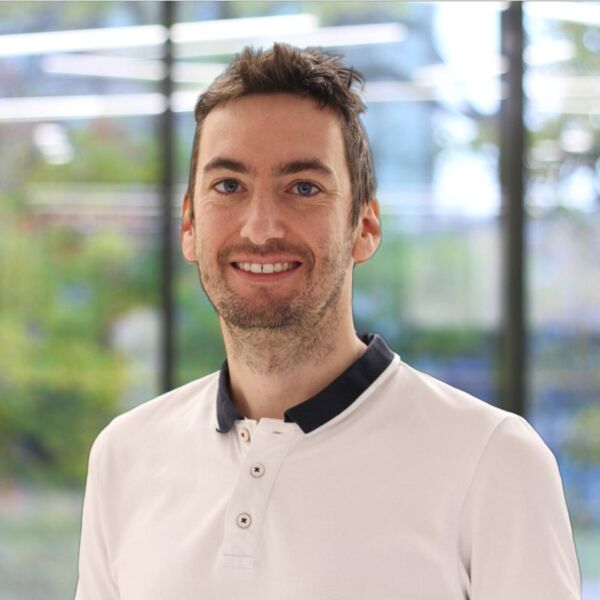
Meet Christophe Ravaud, a Postdoctoral Research Scientist in Prof. Paul Riley’s group, who studies immunomodulation following cardiac injury. His research is focused on the importance of cardiac lymphatics post-myocardial infarction for optimising heart repair.
Can you give a brief overview of your career trajectory so far?
I studied Genetics and Development at the University of Nice Cote d’Azur, in France, where I completed my PhD from 2013 to 2017.
My PhD research was about the side effects of HAART therapy on human adipose stem cells, focusing on their self-renewal and differentiation into white and brown adipocytes. After completing my PhD, I moved to Oxford and started work as a Postdoctoral Research Scientist in Prof. Paul Riley’s group at DPAG and Oxstem, an Oxford spin-out, which plans to develop small molecule drugs that can activate repair mechanisms that already exist within the body.
Since May 2020, I have joined an MRC programme in Prof. Paul Riley’s group to study immunomodulation following cardiac injury. More specifically, I am investigating cardiac lymphangiogenesis, which occurs post-myocardial infarction, to optimise the local injury environment for tissue repair after a heart attack.
Since September 2022, I have been a Junior Research Fellow at Kellogg College and act as a college advisor for DPhil Students.
What is your research focus?
My research focuses on the importance of cardiac lymphatics and how important they are post-myocardial infarction to optimise heart repair.
It has been shown already in the lab that the cardiac lymphatic system is activated following MI and that further stimulation with VEGF-C resolves the immune response and improves cardiac function. However, due to a very short half-life, this growth factor is sub-optimal for clinical use.
Thus, my post-doc aim is to enhance the intrinsic regenerative potential of the infarcted adult heart using small molecules. To achieve this, I have established a sprouting assay using human lymphatic endothelial cells to mimic lymphangiogenesis in vitro. I miniaturized this cell-based assay in a 384 well-plate to be able to screen libraries of compounds. This assay is based on a phenotypic screen, and I am using automated imaging and post-hoc analyses to select, cluster and quantify hits. The best candidates are being further characterised and progressed through combined medicinal chemistry and preclinical models of adult cardiac injury.
What has been your highlight this past year?
Last year, I joined my departmental Outreach and Public Engagement Working Group, and we did several events such as “Science in the Park” and the “IF Festival”. This was my first real experience doing outreach, and I really loved it. I created a quiz, “How much do you know about your heart?” and it was great to share some fun facts about the heart. I was actually amazed to see how kids (and adults) were willing to learn things, and it was quite rewarding to see them impressed and happy with what they had learned during the day. I truly believe it is very important as a researcher to interact with the young generation to share our knowledge in an accessible way and create new vocations in Science.
What do you do outside of the lab?
I enjoy social activities, and therefore, I organise board game evenings once a month at the IDRM. This is a great way to discover new games and meet other people from the building.
During my spare time, I enjoy doing sports. I train running regularly, and I like to push myself in events such as the Oxford Half Marathon. With my lab friends, we participated in the Tough Mudder, an obstacle run in the mud. It was challenging, but we all finished, and I keep very nice memories from it. I also cycle and practice tennis and football with friends.
Finally, I am interested in new technologies and gaming.