

Carolina Roque Silva
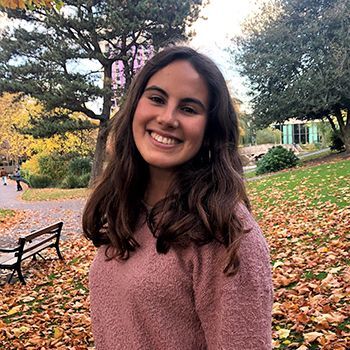
Meet Carolina Roque Silva, Research Assistant in the Vieira Group, a lab that focuses on the role of the transcription factor Wilm’s tumour 1 (WT1) in epicardial formation, and the process by which epicardial cells become activated and invade the heart’s myocardial layer called epithelial-to-mesenchymal transition (EMT). Both processes are key for heart development and regeneration.
What is your role within the Group?
I do a bit of everything helping with the day-to-day running of the group. My work ranges from genotyping our different mouse models, processing samples for different experimental approaches, including sectioning, immunostaining, histology, and imaging, as well as tissue culture and analysing data from High-resolution Episcopic Microscopy (HREM).
Nevertheless, I do have my own pet project. It consists of differentiating human embryonic stem cells (HESC) into epicardial cells. The purpose is to characterize the expression of WT1 along the differentiation stages, and then upon inducing EMT. The next step would be knocking out WT1 and its antisense sequence from the initial stem cells, to then evaluate how epicardial cells formation and subsequent EMT would be impacted.
What has been a highlight of your career so far?
My career is still in its very early stages - I started this job after completing a master's degree and have been in post for 2 years now. Looking back, I believe being offered this position has been a highlight itself. This is because I have learned so many different wet lab techniques (and continue to do so) and met so many bright researchers within the University. As a result, I’ve grown a lot, not only personally, but also as a scientist, and I’m ready to take the next step: applying for a PhD programme to start next year.
What do you do outside of the lab?
Alongside my full-time job as Research Assistant, I also work part-time as a field marketing representative for Proteintech – an antibody, ELISA kit, and protein manufacturer based in Manchester – which I started one year ago. My role consists of organising events and workshops, promoting their marketing campaigns, and being the point of contact between the company and the labs at the University of Oxford.
Outside of the work environment, I like to stay active. I do weekly runs, and enjoy sports that defy gravity, such as climbing, pole, aerial hoop and silks. Adding to that, I have a passion for travelling, whether it is solo backpacking, or a city break with friends. My next trip will be Oslo, Norway in November.
How have you contributed to IDRM life?
As part of my job with Proteintech, and together with the worldwide science festival Pint of Science, I had the opportunity to organise a seminar at the IDRM to mark the National Postdoc Appreciation Week (19 – 23 September). We had an internal speaker, Dr Fabian Klein (from the immunology floor), and I also invited Dr Naveed Akbar from RDM’s Division of Cardiovascular Medicine.
Since the IDRM is a fairly new building, this was a great opportunity for people across the three floors to get to know each other and network over pizza and drinks. I was very pleased with the turnout.
In addition, I’ve been taking part in IDRM Organisational Culture Forums, led by Dr Iris Hofmann and Professor Paul Riley, where we’ve been working towards shaping the identity of the institute and creating a sense of community.