

Antonio Garcia Guerra
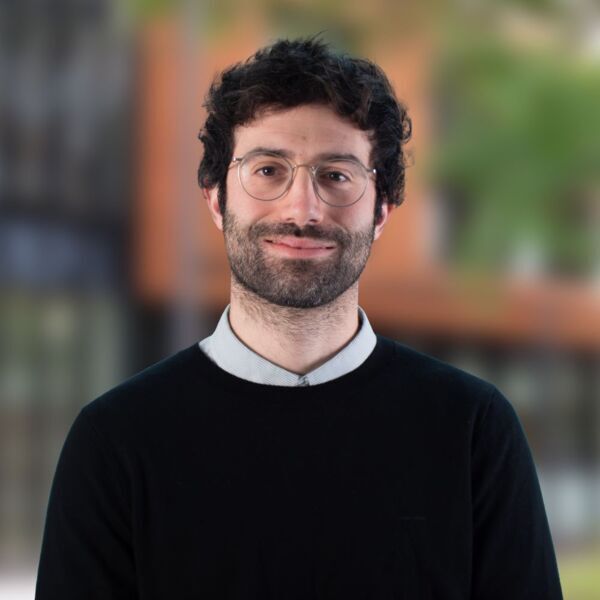
Meet Antonio Garcia Guerra, a Postdoctoral Researcher in the Rinaldi Group. Antonio completed his DPhil in Biophysics at the University of Oxford, where he focused on RNA nanotechnology and gene editing. He has since held a range of research roles across Oxford, developing CRISPR-based tools and delivery systems. His current work explores cell-specific genome editing using CRISPR MiRAGE, with applications in neuromuscular disease.
Tell us a little about your current research
I am working on making genetic medicines specific to the cell they are intended to treat. For this, I have developed a CRISPR technology that uses small RNAs (microRNAs) present inside cells to decide if it is in the right place. If it isn't, the CRISPR system remains off, but, if it is in the right cell, the CRISPR system gets activated and go on to carry out its therapeutic function. The technology is named CRISPR MiRNA-activated Gene Editing (MiRAGE). This work is now sponsored by Novartis. Prof. Rinaldi and I are applying CRISPR MiRAGE for exclusively treating motor neurons for Spinal-Bulbar Muscular Atrophy (SBMA). Additionally, I am developing novel delivery systems for genetic medicines. One of the biggest bottlenecks for genetic medicine deployment to the clinic is our inability to deliver these drugs efficiently where they are needed. I have received a grant by the Friedreich's Ataxia Alliance for the development of delivery systems to unlock treatments for Friedreich's Ataxia.
What inspired you to pursue this field of research?
I have been very interested about the potential of genetic medicines for revolutionising medicine. However, cell specificity and delivery impede their translation into the clinic. I found that these problems were related to each other, after all, you need delivery systems for genetic medicines, and you need smart genetic medicines for the safe and precise treatment of disease. I concluded I needed to work in these issues in parallel if I were to produce a meaningful impact in the field. Furthermore, I was also attracted by the multidisciplinary nature of genetic medicines. You need to understand biology, chemistry, medicine, physics; and I find this very stimulating.
What is one of the key moments or discoveries during your research career that made you stop and think 'this is why I do what I do'?
For me the most relevant moment was when I saw my CRISPR MiRAGE perform as designed in a disease model. I was excited for the opportunities that this will bring, the crystallisation of my effort, and the reward of all the support I was offered in the Rinaldi and Wood Labs.
What has been the most significant challenge you've faced? How did you overcome it and what valuable lessons did you take away from that experience, both personally and professionally?
I think the work we do at the IDRM is in itself a challenge. We face steep challenges to bring treatments to patients, to understand nature in a meaningful and applicable way, and we need the resolve and patience to see it through. I think the mots valuable lessons learned for me are those of perseverance, kindness, and resilience. These are the qualities you need to embark in this journey.
How has being a part of the IDRM community helped shape your research and/or career development?
The IDRM community has been essential for me. I have met incredible people from places across the globe, working in stimulating problems in a very passionate way. All this has become the fabric of my everyday routine and I hope I can keep learning from it.
How do you like to relax and recharge outside of the lab?
I do enjoy going to the gym, reading and spending time with friends. I enjoy the little things such as meeting my friends for dinner or going somewhere interesting.
What would be the theme song to your life right now?
Breathe by Télépopmusik.