

Andreas Tarcevski
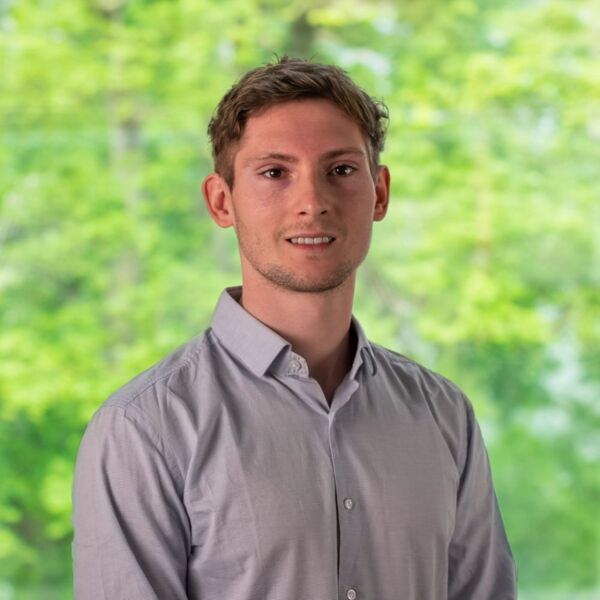
Meet Andreas Tarcevski, a DPhil Student in the Developmental Immunology Group led by Prof. Georg Holländer. Andreas aims to investigate lympho-stromal interactions and thymus architecture by means of single-cell transcriptomics, epigenomic and spatial datasets across development, health, and disease. Together, these techniques will provide a better understanding of organ ontogeny, its maintenance and senescence while hopefully also offering insights into potential strategies facilitating its regeneration.
Can you give a brief overview of your career trajectory so far?
I started my academic career at ETH in Zurich, Switzerland. This is where I conducted my undergrad and graduate studies in chemical and bioengineering. My fascination for organic chemistry and engineering led me towards catalysis research. This area plays a pivotal role in the understanding and improvement of (bio-)chemical transformations and lies at the heart of many industrial processes (e.g. determining their economic feasibility). Catalyst design requires a broad understanding of numerous interdisciplinary characterization techniques, creativity, and a profound comprehension of molecular interactions.
During my master’s, I also had the opportunity to conduct a research project in biochemical engineering, studying the aggregation of Aβ 1-42 in the context of Alzheimer’s disease. I found great satisfaction in working with biotechnological methods involving protein expression, purification, and characterization. For this project, I studied amyloid fibril aggregation in vitro using kinetic modelling to infer aggregation mechanisms in different environments. The complexity of biological systems and the elegance of biochemical/biotechnological methods captured my attention and inspired me to enrol in a subsequent master’s program in biotechnology at ETH’s biosystems science and engineering department in Basel. This is where I expanded my wet lab and immunology knowledge, learned about additional characterization techniques and discovered my passion for bioinformatics as a central tool to study disease pathologies and their impact on biological systems.
Furthermore, I acquired valuable industry expertise during internships at Novartis Pharma AG and InterPharmaLink AG, respectively. Here, I gained insights into the regulatory landscape within the healthcare and pharmaceutical sector, delved into economic aspects of M&A transactions, and engaged in different areas of scientific and financial consulting.
What is your research focus?
I am interested in the development of the adaptive immune system, which largely takes place in the thymus. This is a crucial organ that is largest in infancy and progressively decreases in size and its ability to produce naïve T-cells after adolescence. The key distinction our immune system makes is the one between Self (i.e. the host’s own healthy cells and tissues) and Non-Self (i.e. foreign antigens and pathogens). Within the thymus, the cell types critically involved in instructing this capacity are thymic epithelial cells (TEC’s) alongside a few myeloid and non-epithelial stromal cell types. The failure to provide instructive interfaces to developing T-cells can have detrimental consequences for the host and lead to the development of autoimmune disorders.
I want to investigate these lympho-stromal interactions and thymus architecture by means of single-cell transcriptomics, epigenomic and spatial datasets across development, health, and disease. Together, these techniques will provide a better understanding of organ ontogeny, its maintenance and senescence while hopefully also offering insights into potential strategies facilitating its regeneration. This could benefit patients suffering from congenital thymic deficiencies, elderly in which the thymus displays decreased functionality due to senescence, as well as immunocompromised individuals such as chemotherapy patients (re-) establishing a more functional immune system.
What has been your highlight this past year at the IDRM?
My highlight this year was the IDRM retreat which took place in Milton Hill House near Abingdon. It was a great opportunity to spend time in a relaxed setting, alongside friends and colleagues from the research group and to socialize with people from the institute. Besides taking part in teambuilding activities, games, and karaoke, it provided me with the opportunity to talk about research and interdisciplinary collaborations.
How have you contributed to IDRM life?
I attended many events, including “Seminar series” talks and presented my own research in the Immunology Floor’s “Get to know each other” event. Also, I am a regular in the IDRM board game nights, which always turn out to be great fun and neat opportunities to catch up with people from across the institute.
What do you look forward to most this year?
I look forward to finishing up some data analysis tasks and the preparation of a talk by the end of this year and then spending some relaxing Christmas days back in Germany alongside my family and friends. Next year, I am looking forward to continuing my work on the integration of data modalities and visiting a conference in Portugal in late spring. Additionally, I was planning on exploring Oxford’s society landscape more actively, attending more talks and debates and maybe engaging in learning a new language.
What do you do outside of the lab?
In my free time, I enjoy playing tennis, table tennis, and volleyball, as well as maintaining a regular gym routine. I also take pleasure in spending time with friends, whether it's over a delightful dinner or whilst engaging in a relaxed game of chess in our common room. My contribution to the organization of events at my college has been a rewarding experience, which is why I am eager to continue this in the next year. These opportunities have allowed me to connect with individuals from diverse scientific and cultural backgrounds, sparked intriguing conversations and given me the ability to make friends from all over the world.