

Andia Redpath
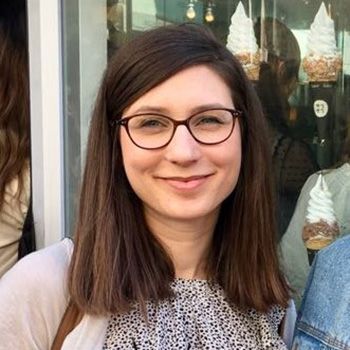
Meet Andia Redpath, Postdoctoral Research Associate in Associate Professor Nicola Smart’s Group, whose research focuses on identifying embryonic programmes that switch off after cardiac development but may be reactivated in injured hearts to force their own repair.
What is your particular research focus?
I investigate the thin layer of tissue surrounding the heart, the epicardium, which is critical for heart formation: it supports muscle expansion, blood vessel formation, and provides the heart’s cellular building blocks. I focus on local environmental signals received and relayed by the epicardium. These are proteins/factors produced by neighbouring cells and received by antenna-like receptors on the surface. The message is internalised and delivered by signalling pathways, which determine various cellular functions. I particularly look at a transcription factor or ‘master regulator’ known to be important, yet its specific functions haven’t been teased out. Understanding these events will allow us to re-introduce beneficial signals within the epicardium that you normally only see in the embryo, so the heart can rebuild itself after injury.
What is your most surprising research outcome this year?
I have a special interest in how Heparan Sulfate Proteoglycan (HSPG) modifying enzymes modulate epicardial signalling. I’ve been doing some new experiments to understand how the ‘master regulator’ mediates this signalling, and found it has a direct effect on one of these enzymes. It matched my previous data, giving me confidence to move forward. But surprisingly, while investigating the epicardial transcriptome in the absence and presence of this master regulator, I uncovered that different epicardial “niches” are affected to varying degrees. This suggests divergence in intrinsic properties and possible origins. I plan to apply for a pump priming grant to see where this could lead.
What do you most look forward to working at the IDRM?
Before I’d even started my postdoc with Nicola, I remember talks about the new building almost seven years ago. I was excited to hear how our work would be enhanced by other researchers with the shared vision of regenerating organs using information from the embryo. It’s amazing that this vision will now have a single home at Old Road campus. I look forward to improving my science with new facilities and having intellectual discussions and collaborations. I already have people in mind and intend to ‘pick their brains’! I used to work in immunology, so I’m excited that there is a huge immunology group on a different level trying to achieve regeneration in other organs. I’m even excited about having a new route to work!
What do you do outside the lab?
I’m an active member of my departmental Outreach and Public Engagement Working Group. We’re planning to do IF Oxford in October and Science in the Park in University Parks. I also volunteer at the Natural History Museum as a Science Saturday Explainer, and recently designed and delivered a workshop at their youth forum explaining the importance of Drosophila flies as a model organism, with the help of Susanne Szydlowski at the CNCB. Creating an engaging activity for teenagers and ensuring they leave having learned something new, feeling excited, and hopefully inspired to study science, is so important to me. Outside of science, I love watching films, training/walking my dog, cooking, sewing, and gaming. I enjoy technical hobbies and approach them with a researcher’s mentality! I do a lot of research beforehand and improve my technique with repetition until I reach the desired outcome! My partner and I virtually lived off sourdough bread during lockdown, but now I’ve returned to the lab I’ve got epicardial cells instead of a sourdough culture to look after!