

Ambra Speciale
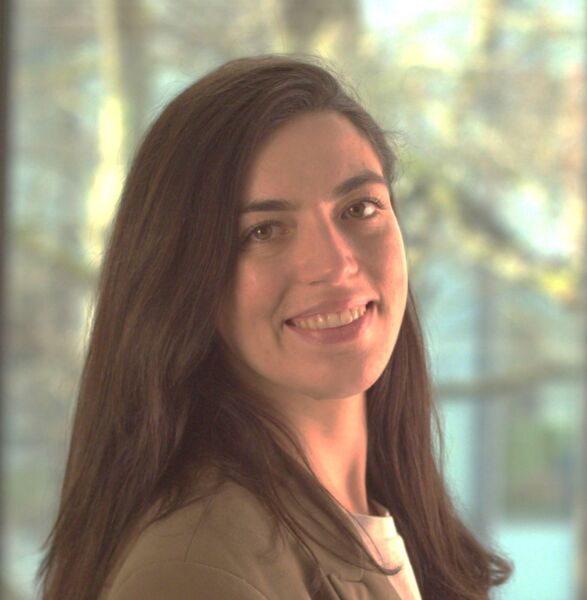
Meet Ambra Speciale, a final year DPhil Student in the Rinaldi Group. Ambra studied Medical Biotechnologies in Catania, Italy, before joining the Wood Lab in 2019 as a Research Assistant. She began her DPhil in 2021 focusing on RNA editing in neurological disorders.
Tell us a little about your current research
I mainly work on the characterisation of RNA editing dysregulation in neurological diseases. The goal is to understand how and why this is contributing to neuronal degeneration, and to ultimately find out how to rescue any editing impairment. I do this by using a mixture of bioinformatic and wet-lab techniques, ranging from RNA editome analysis to validation of targets and affected pathways in differentiated patient-derived iPS-motor neurons. Recently, I have also been working on a project based on developing personalised medicine treatments for ultra-rare genetic neurological disorders.
What inspired you to pursue this field of research?
I have always found it fascinating how a single change in a gene can cause dramatic consequences, and even more so when this happens in the brain, which is the most complex organ. Every day I try to do my best to add even the tiniest piece to this big puzzle.
What is one of the key moments or discoveries during your research career that made you stop and think 'this is why I do what I do'?
The first time I differentiated motor neurons from patient-derived iPSCs(1) really made me fall in love with the research I do. Seeing those little things change from one day to another, making axons and connections, really fascinated me and it still does!
What has been the most significant challenge you've faced? How did you overcome it and what valuable lessons did you talk away from that experience?
Any PhD journey comes with many challenges to face. Sometimes you need to learn a completely new technique, other times science is simply not being your friend for weeks. What I learned is that it's part of the process, and when things finally fall into place, it will be worth it!
How has been part of the IDRM community helped shape your research and career development?
The IDRM has felt from the start like a place where collaboration can happen. Everyone is very helpful, and you don't have to 'reinvent the wheel' every time you need to do something new as there is so much expertise around. This makes a huge difference in how I approach my work. Also, colleagues are very keen on public engagement, which is something I particularly enjoy. It was great to take part in the Oxford Open Doors event at our Institute presenting the Rinaldi’s lab 'Muscle Switch' game to grown ups and kids of all ages. And how can I forget the day when we filmed the IDRM promotional video! Such a fun experience - it made me more confident about speaking in public.
How do you like to relax and recharge outside of the lab?
I've been practising pole dancing (just got my beginner certificate) and I recently started self-teaching guitar. After a long day I like to go back home and start playing pop songs and sing along - hopefully my neighbours don't mind!
What would be the theme song to your life right now?
If I had to choose a song for my life right now, it would be "Unwritten" by Natasha Bedingfield. It often comes up on the radio and it always makes me feel positive about what the future holds for me after PhD. And, ironically, it reminds me of something rather important I need to write...
(1) iPSCs - Induced Pluripotent Stem Cells
