

Synchrony
Through ‘Synchrony’, we aim to share the beauty, complexity, wonder, and fragility of the growing embryo.
We hope to discuss how we develop before birth and why it’s important to understand human development.
About Synchrony
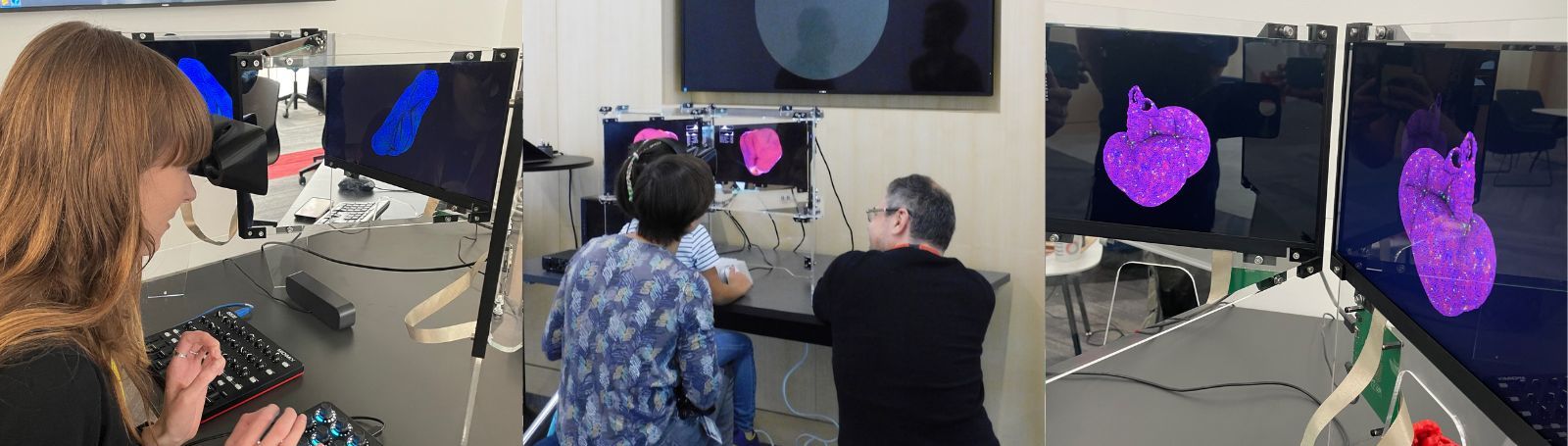
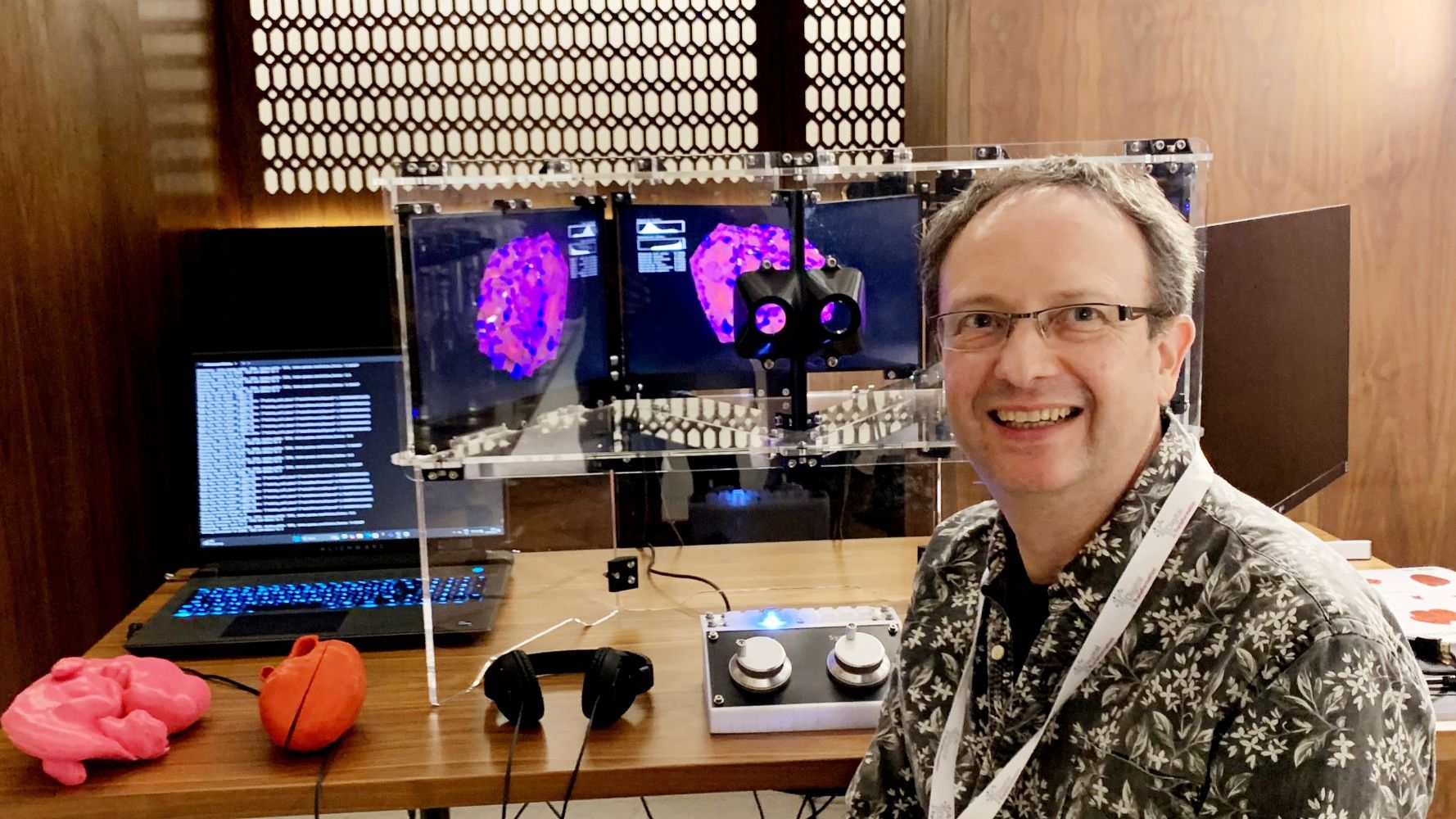
‘Synchrony' is an interactive digital artwork created by computational artist Andy Lomas in collaboration with the Srinivas & Riley research groups, who study how the human heart acquires its shape and ability to beat rhythmically in the embryo.
The piece uses mathematical modelling to create an abstract representation of the developing heart, inspired by advanced imaging techniques used by researchers. An interactive stereoscopic installation enables viewers to explore how patterns of behaviour emerge from coordination between individual cells.
Science and Artwork
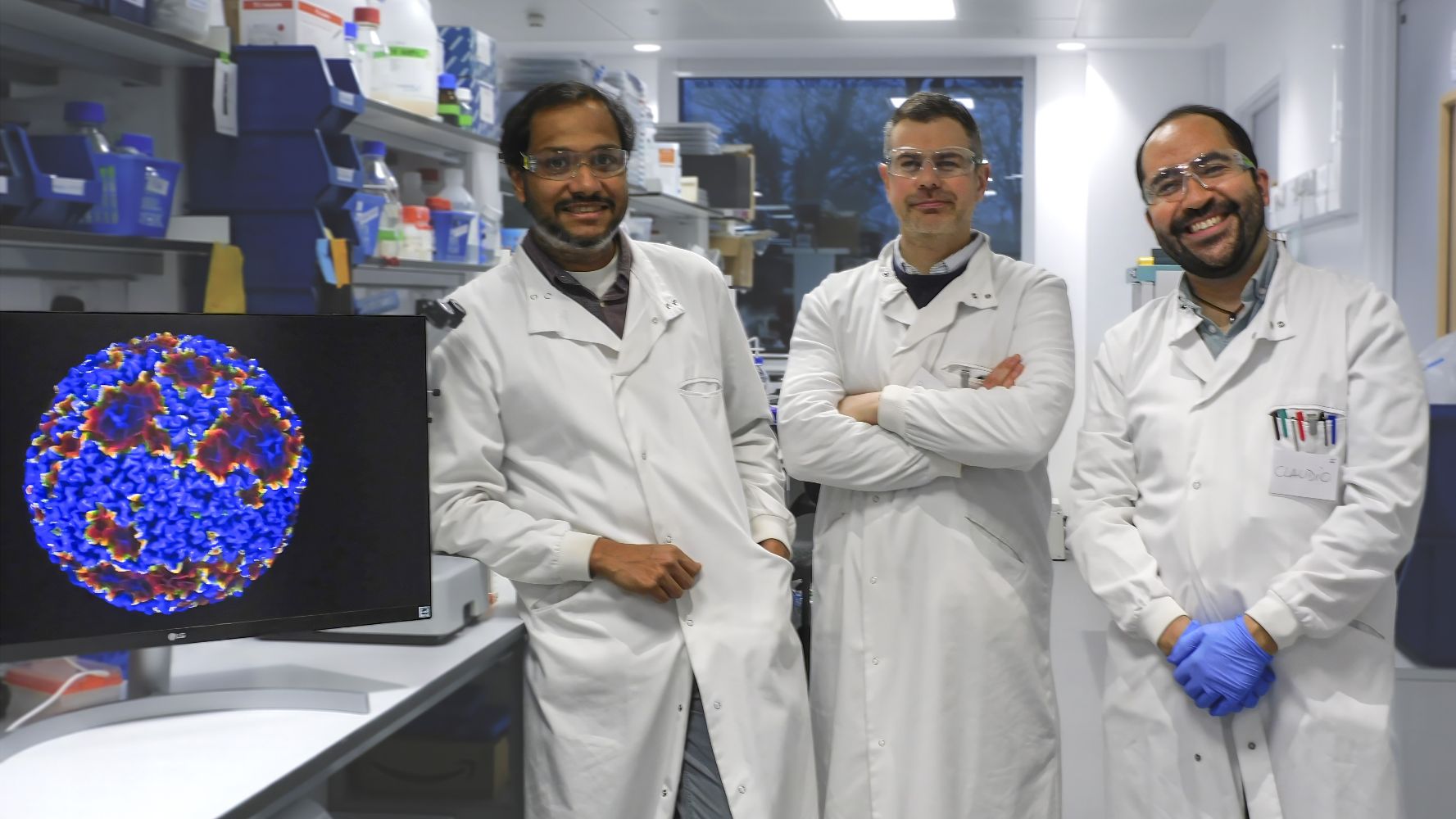
Heart defects are one of the most common congenital diseases, affecting 1 in 100 babies. Starting as a single cell, a human embryo undergoes remarkable changes in shape and size. The heart begins as a crescent-shaped group of a few hundred cells, which then form a tube that loops and grows, eventually forming the four-chambered organ we know.
The more we know about early heart development, the more we empower clinicians and medical professionals in providing better diagnosis and treatments for conditions like congenital heart defects.
How the artwork was made
Andy Lomas is a computational artist with an extensive background in creating computer-generated effects and 3D animations for films. He had extensive conversations with the researchers, discussing how biological forms emerge. The project highlighted how science is at the intersection of nature and human endeavour, and art can serve as an accessible language to communicate science more effectively.
This collaboration highlights how physical properties like force, velocity, tension and gravity experienced by individual cells can, and do, contribute to the shaping and the emergence of patterned behaviour within the heart and all our organs.
Useful Links
If you are interested in viewing or displaying the artwork, get in touch: